
You may have discovered my work through a particular film.
A ceremony in the middle of the vineyards in Provence. A very elegant wedding in an estate. A story told through the voices of the couple. Or, on the contrary, a much more spontaneous film, driven by the energy of a day and an evening.
And sometimes, it’s that film that triggers something.
You say to yourself: “This is exactly what we would like.”
This is obviously a very good thing. If you are considering entrusting me with your wedding film, it’s probably because you see yourself in my way of filming, editing, working with sound, and telling a day.
But there is an important nuance.
Your film will never look exactly like the one you just watched.
And that is precisely the point.
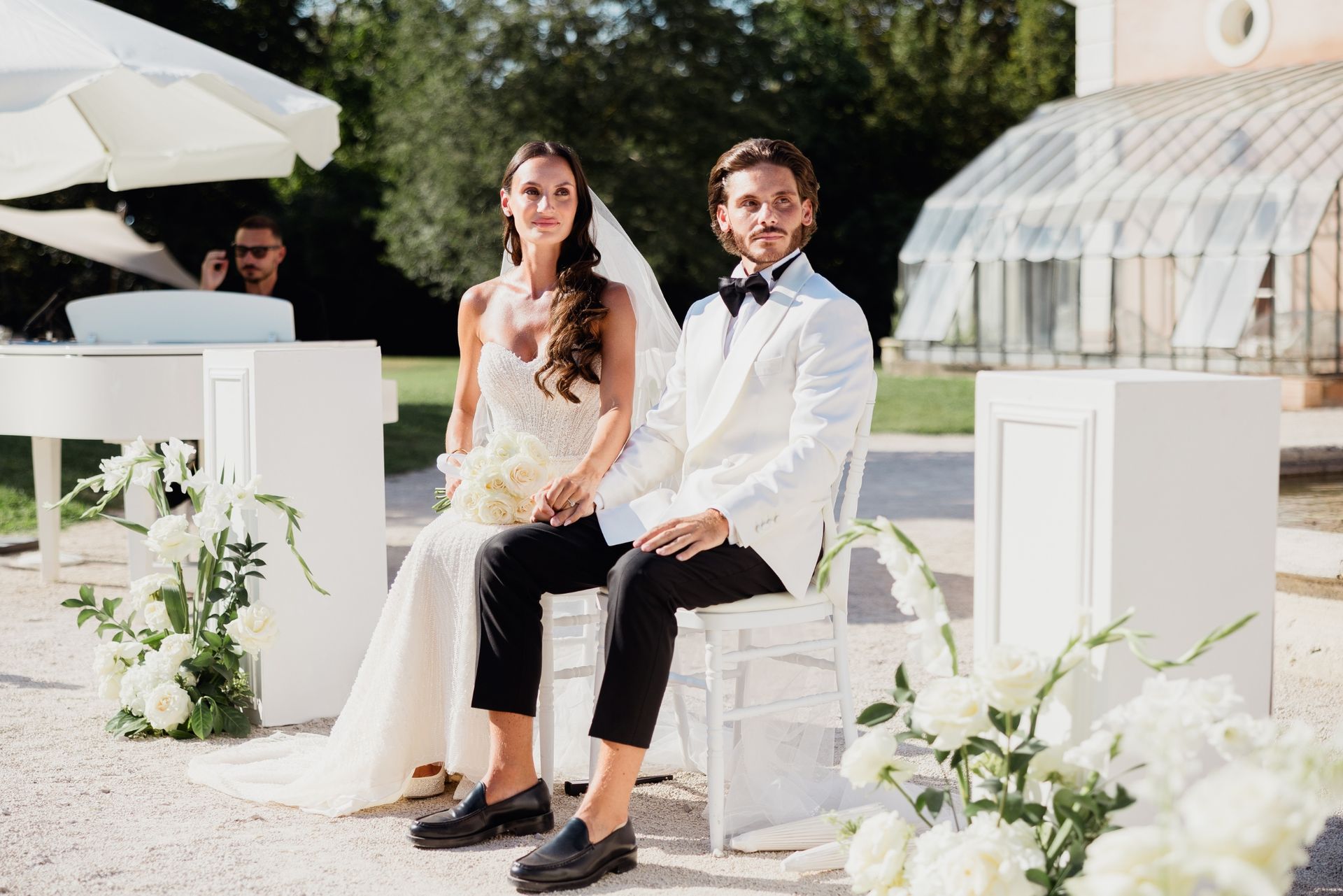
📸 Maxime Bernadin
You choose a look, not a film model
When you choose a wedding videographer, you naturally look at their previous films.
This is the best way to understand their universe.
You will be sensitive to certain things: the light, the camera movements, the space given to voices, the music, the rhythm of the editing, the way emotions are shown without being highlighted.
All of this constitutes an identity.
And this identity must remain recognisable from one film to another.
But it does not mean that all films must follow the same recipe.
I do not start from a pre-established structure into which I place your wedding. I start from what actually happened, from who you are, from the atmosphere of your day and from everything you have given me to film.
The frame is mine. The material is yours.
It is this meeting between the two that creates the film.
You do not choose the reproduction of a film you liked. You choose the person to whom you will entrust yours.
Two weddings never tell the same story
This is probably what I love most about this job.
I can arrive two Saturdays in a row at two very beautiful wedding venues in Provence, with roughly the same equipment and the same way of working, and come back with two completely different materials.
Because a wedding is not just about its location or its decoration.
There are very demonstrative couples and others who are much more reserved.
Ceremonies filled with speeches, laughter and tears. Others with very few words, but a lot of things conveyed through looks.
There are families that are omnipresent. Groups of friends that immediately bring a crazy energy to the day. Very elegant and composed weddings that completely shift during the evening.
And then there are all those little moments that no one had anticipated.
A reaction during the preparations. A phrase spoken by a father. A grandmother taking her granddaughter's hand. A fit of laughter during the vows. A few seconds of silence just before entering the ceremony.
It is this material that interests me.
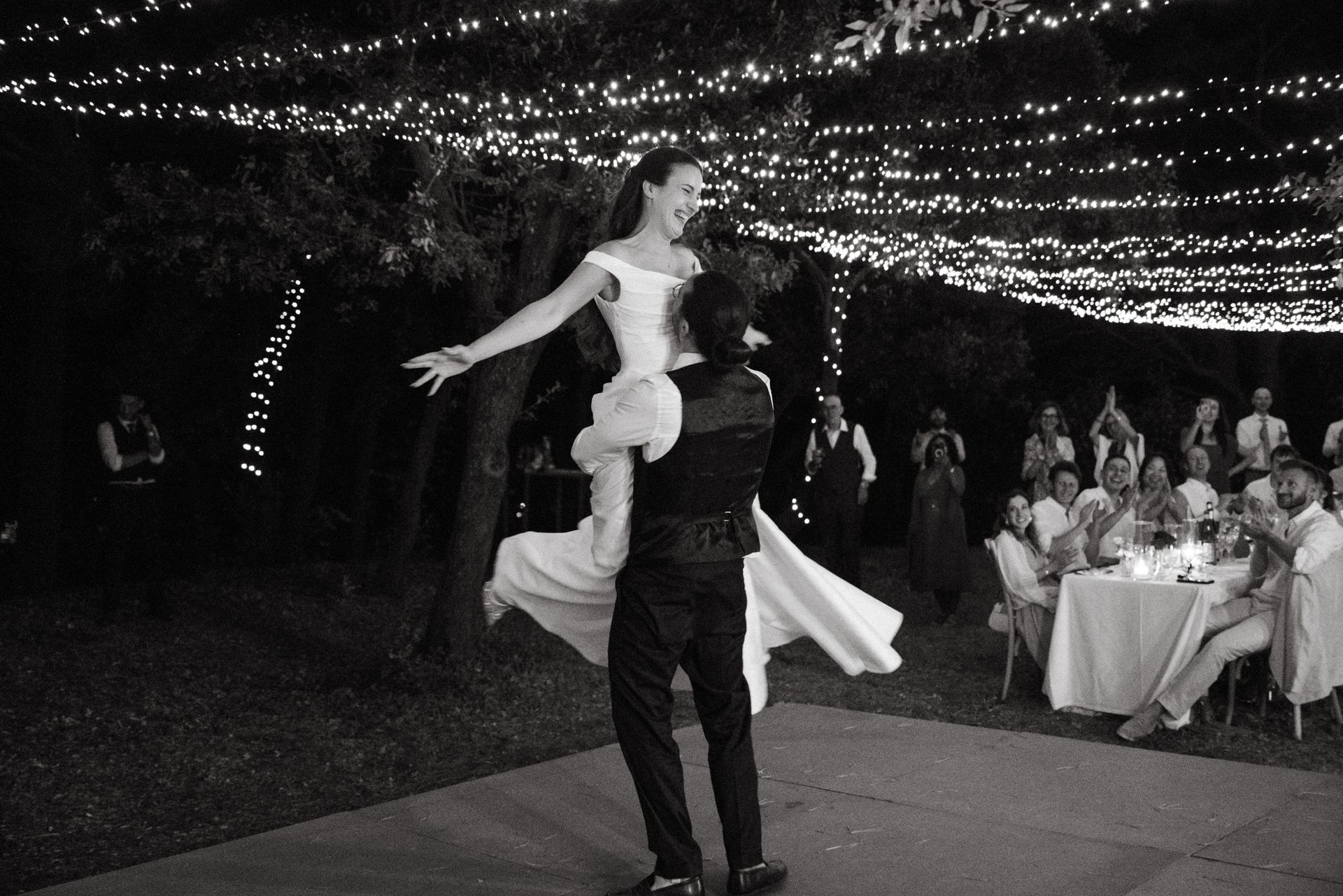
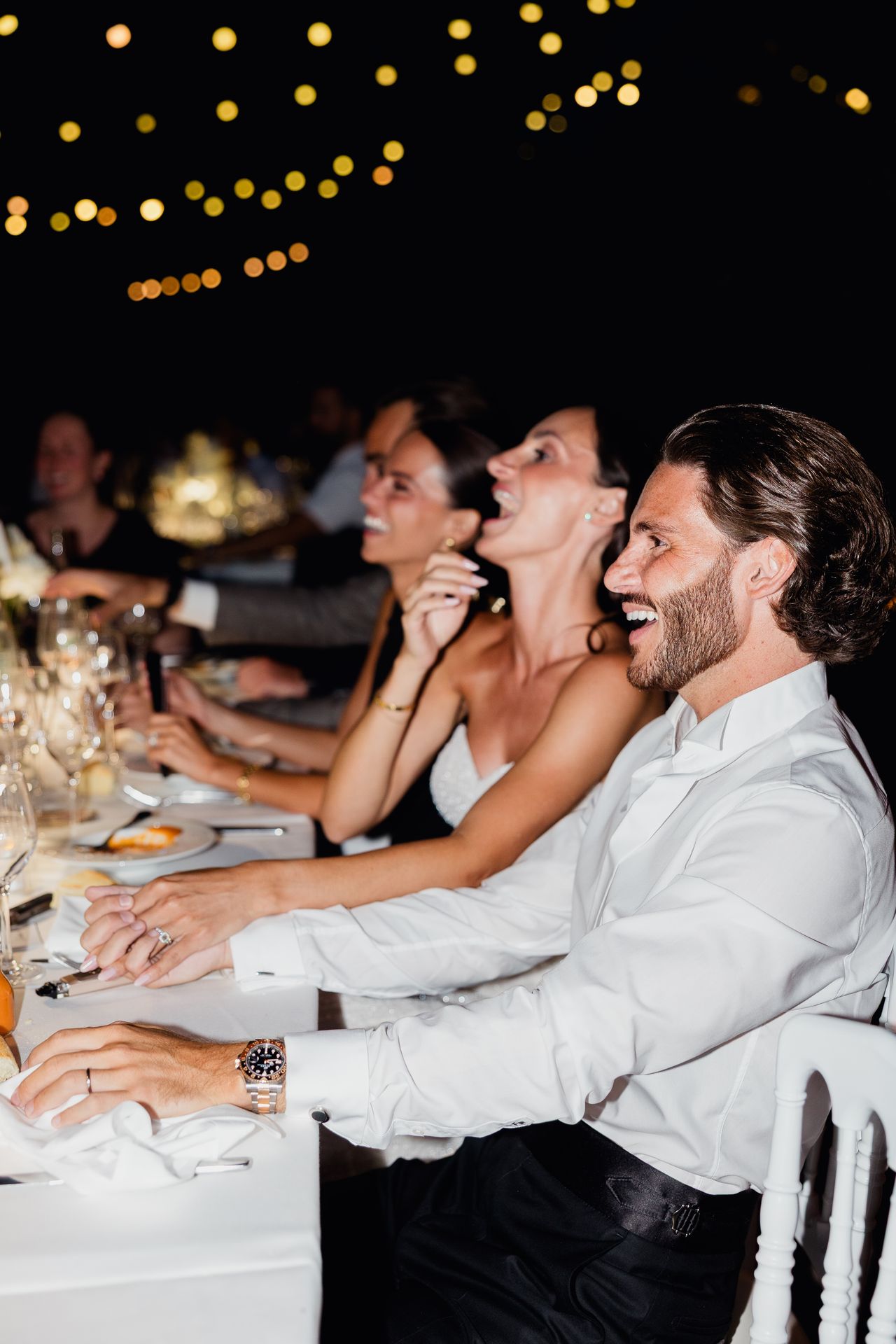
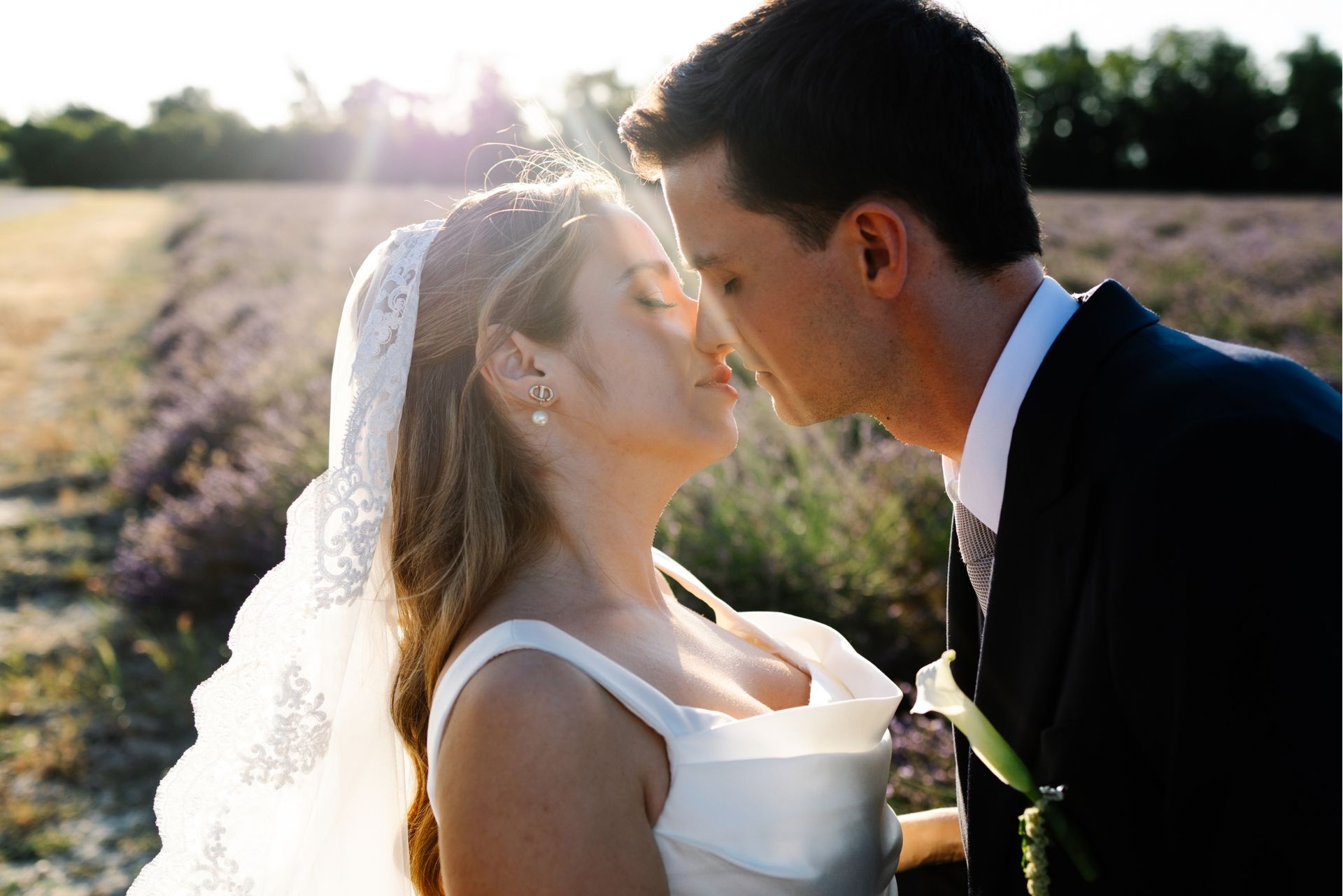
📸 Camille Lopez - Maxime Bernadin - Roxane Nicolas
Write something ...
The rhythm of your wedding becomes that of your film
We often talk about the « style » of a wedding videographer.
But the rhythm of a film should not only be that of the videographer.
It should also be that of the wedding.
An extremely festive day, with many people, movements, surprises, speeches and a very strong evening, will naturally provide a denser and more rhythmic material.
Conversely, an intimate wedding, with a very personal ceremony, more suspended moments and few speeches, may call for more silence, breathing and contemplation.
I could try to standardise the two.
I see no point in that.
My work is rather to find, in each wedding, the rhythm that belongs to it.
That’s also why I don’t know exactly what your film will look like before I’ve shot it.
I have a direction. I know your story. We exchanged ideas before the wedding. As part of a Signature film, some sequences may even have been thought out and prepared in advance.
But the big day always retains its element of surprise.
And fortunately.
What will remain recognisable from one film to another
If each film is different, that obviously doesn’t mean my work changes completely at every wedding.
There is a common thread.
My way of framing. Of seeking gestures and glances rather than provoking situations. Of giving significant importance to real sound. Of constructing the edit. Of working the music. Of creating breaths. Of moving from a very intimate moment to something much more energetic without losing the coherence of the narrative.
There is also the work of colour. I seek a natural, elegant and coherent colourimetry throughout the film, faithful to the lights, the locations and the different atmospheres of the day. It must contribute to the identity of the film without ever overshadowing what we are watching.
There is also my way of being present on the wedding day: observing a lot, intervening little.
Without intervention. Without staging.
The film is built from the material: the glances, the gestures, the voices, the silences.
This is probably where the most important common point lies between the films you can see on my site.
Not in a succession of identical shots.
In a way of looking.
A beautiful location is not enough to make a film
Provence obviously offers quite an incredible setting for a wedding.
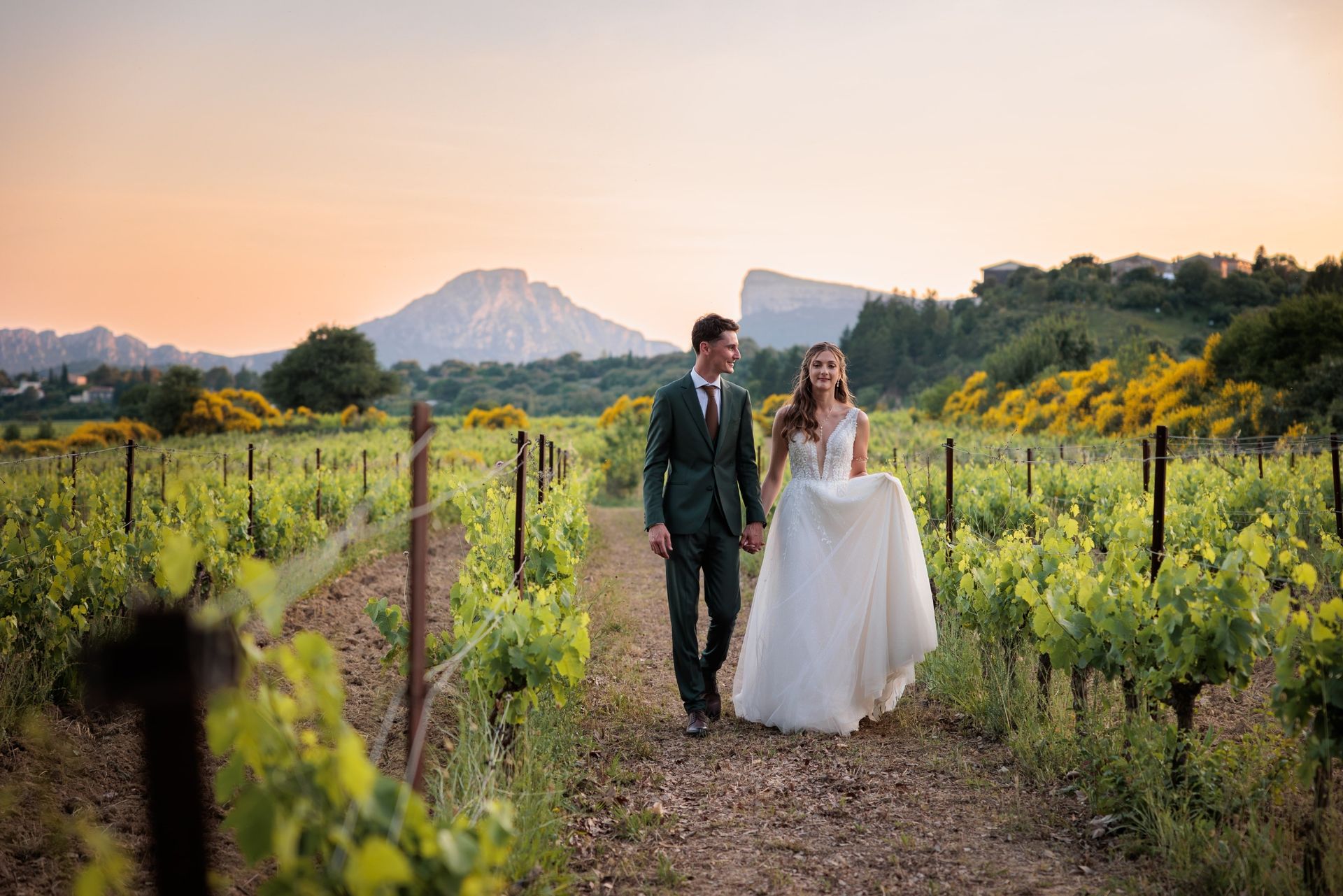
The estates, the farmhouses, the light stones, the olive trees, the vineyards, the late afternoon light…
As a wedding videographer in Provence, this aesthetic naturally forms part of my work.
But a place, however beautiful it may be, does not tell a story by itself.
Two couples can get married in exactly the same place and leave with two films that have almost nothing in common.
Because I do not film an estate as a backdrop to fill.
I rather seek to understand how you live there.
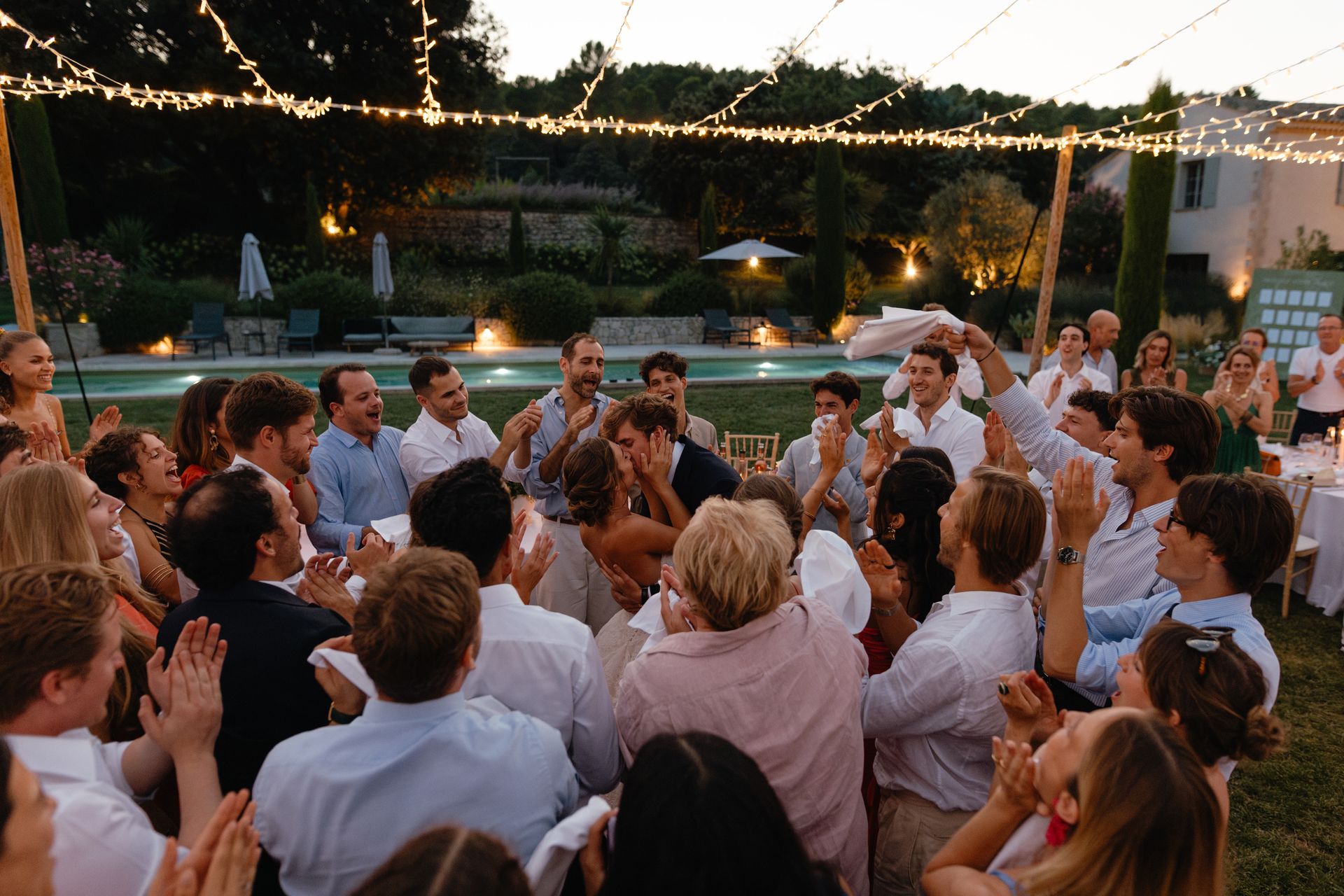
The way your loved ones invest the places. The moment when the light changes during the cocktail. The spot where you isolate yourself for a few minutes. The energy of the ceremony. The way the evening completely transforms a space that seemed very wise just a few hours earlier.
The venue participates in the film.
It does not dictate it.
📸 Laura Stojanov
And for a destination wedding, this is even more true
When a wedding takes place over several days, the material changes again.
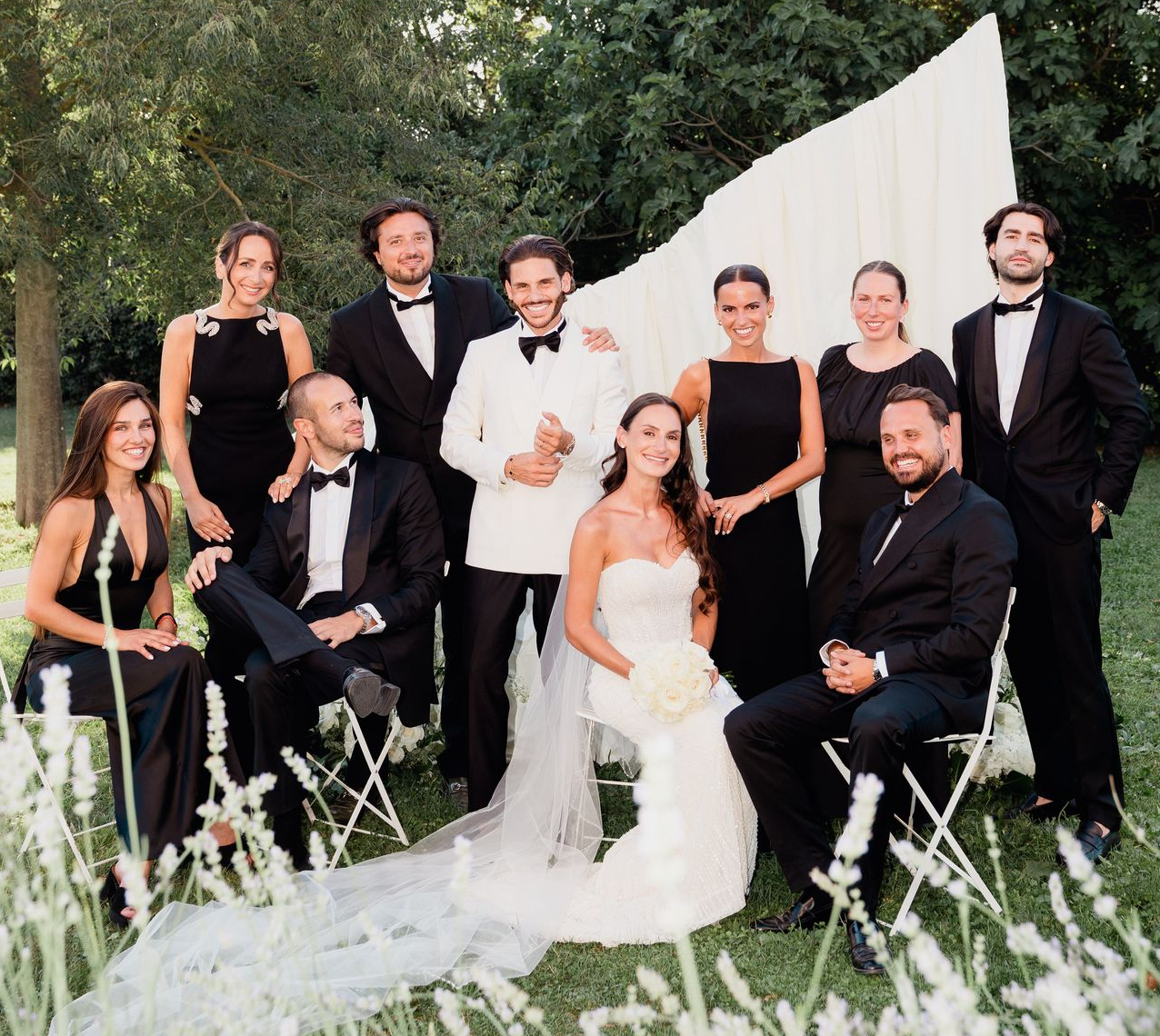
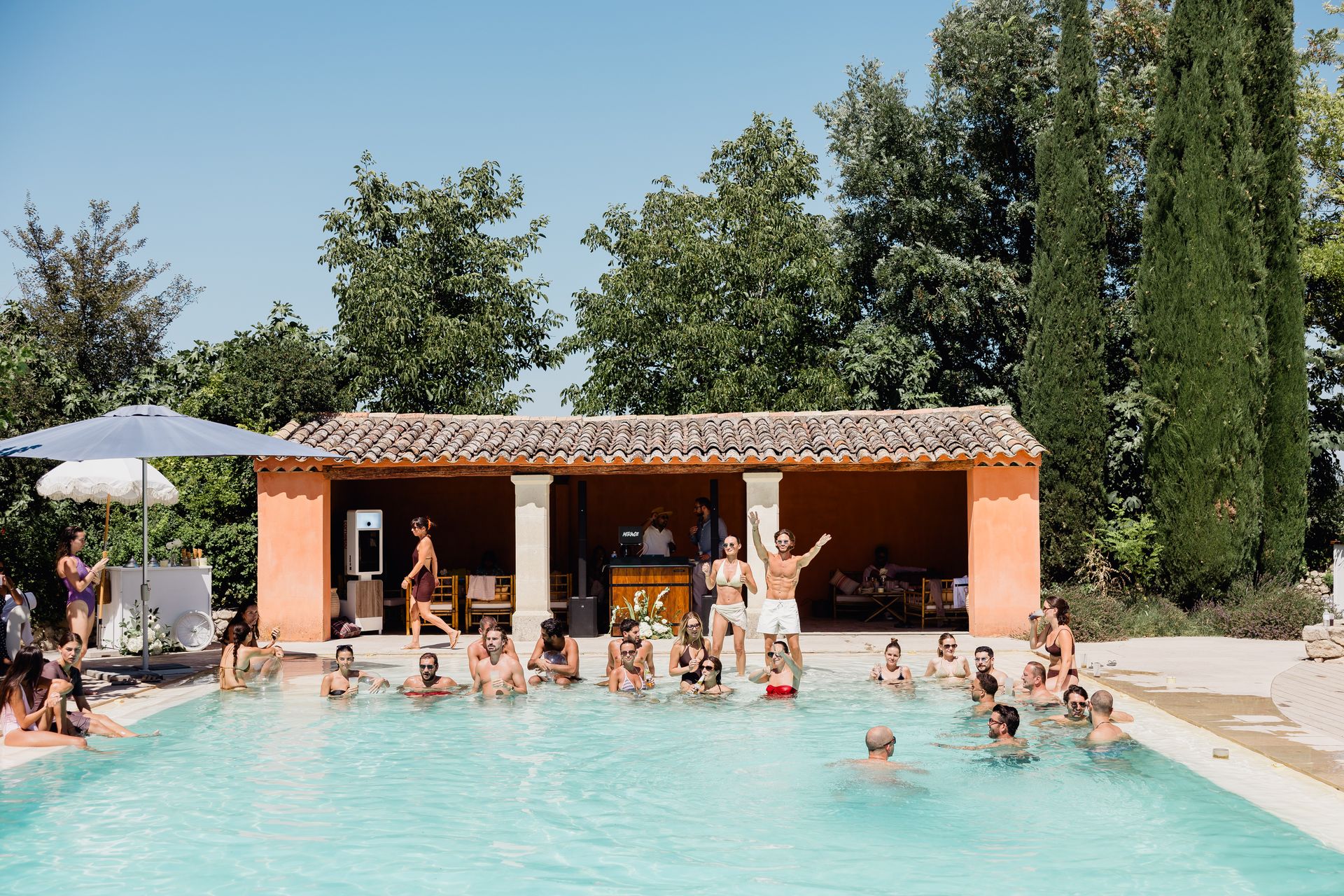
A welcome dinner the night before, the wedding, sometimes a brunch the next day: the story no longer simply starts on Saturday with the preparations.
You discover more about loved ones, relationships, the different atmospheres. A very relaxed dinner the night before can thus contrast with the elegance of the ceremony the next day and bring a completely different material to the film.
This is also what interests me in the destination weddings in Provence: having the time to tell more broadly what is happening around the wedding.
→ Why film a destination wedding over several days?
Write something ...
📸 Maxime Bernadin
Sound sometimes tells more than images
There is also a material that is less noticeable when watching a film for the first time: the sound.
For me, it is essential.
A voice that trembles slightly during vows. A burst of laughter off-screen. A phrase of a few seconds in a speech. The noise of a room before an entrance. The applause that erupts after a ceremony.
All of this profoundly influences the construction of a wedding film.
It is particularly for this reason that two visually similar ceremonies can yield two very different films.
One can offer a wealth of narrative material thanks to the speeches.
The other almost none.
In this second case, I will not artificially try to create the same narrative.
The film can rely more on gestures, music, ambient sounds, and breaths.
I prefer to build with what exists rather than forcing your wedding to tell what it was not.
And the Signature formula goes even further
With Signature, the principle remains the same, but the narrative begins before the wedding.
We can work from your story, your archives, your voices, and sequences imagined together in advance.
This obviously opens up other possibilities.
But again, there is no universal script.
Some couples have a story made up of travels, separations, reunions, or life changes.
Others sometimes tell me:
"Our story is quite simple."
And that is never really a problem.
Because a film does not need a succession of extraordinary events to have something to tell.
What interests me is what belongs to you.
And it is also what will make your film unable to be someone else's.
If you think that your story is simple and there is not much to tell, I have actually dedicated an article to this question: « Our story is quite simple: is there really something to tell? »
And if this way of building a film around your story resonates with you, you can also discover the Signature formula and how I build it with the couples.
So, what will your film look like?
I cannot show it to you today.
And in the end, it’s rather good news.
I can show you my universe, my way of filming, weddings in Provence, in Montpellier or elsewhere. I can explain my way of working. You can watch several of my films and check that you find yourself in this perspective.
But your film does not exist yet.
It will take shape from your wedding, your loved ones, your voices, your energy and all those moments that are impossible to completely foresee.
That is also why I advise you not to choose your videographer by only asking yourself:
"Do I want a film like this one?"
The question might rather be:
"Do I want this person to tell ours?"
📸 Ludovic Lieffrig
Your wedding will have its own substance. Your film will too.
My job is to give it a shape without taking away what makes it unique.
Whether your wedding takes place in a domain in Provence, near Montpellier or as part of a multi-day destination wedding, the goal remains the same: to create a film true to what I have seen, heard and felt with you.
Not to reproduce the one before.
And not to anticipate the one after.
Simply to tell yours.