
In 2027, the most interesting trend may be precisely to seek less of a “trendy” wedding.
Inspirations remain numerous. They come from fashion, design, social media, gastronomy, or travel.
But behind the colours, decorations, and details that evolve each year, a deeper movement is emerging: couples seem to be seeking less and less to replicate a wedding model to create a celebration that truly resembles them.
The wedding is becoming more personal, but also more vibrant.
There is more focus on the guests' experience, the atmosphere, the rhythm of the day or weekend. The codes can be elegant and very refined, while allowing more room for spontaneity.
This is also what I observe through the weddings I film and the projects being prepared for 2027.
As a wedding videographer in Provence, this evolution particularly interests me: when choices become more personal, the film also has much more unique material to tell.
1. The wedding becomes an experience, not just a day.
For a long time, the organisation of a wedding was primarily thought of around one day and a fairly identifiable sequence: preparations, ceremony, cocktail, dinner, and evening.
This model still exists.
But more and more couples are now thinking of their wedding as a broader experience.
The welcome dinner is probably one of the most visible examples.
It allows guests to gather the night before, often in a much more informal atmosphere. The wedding then takes on another dimension the next day, sometimes extending around a brunch or a pool party.
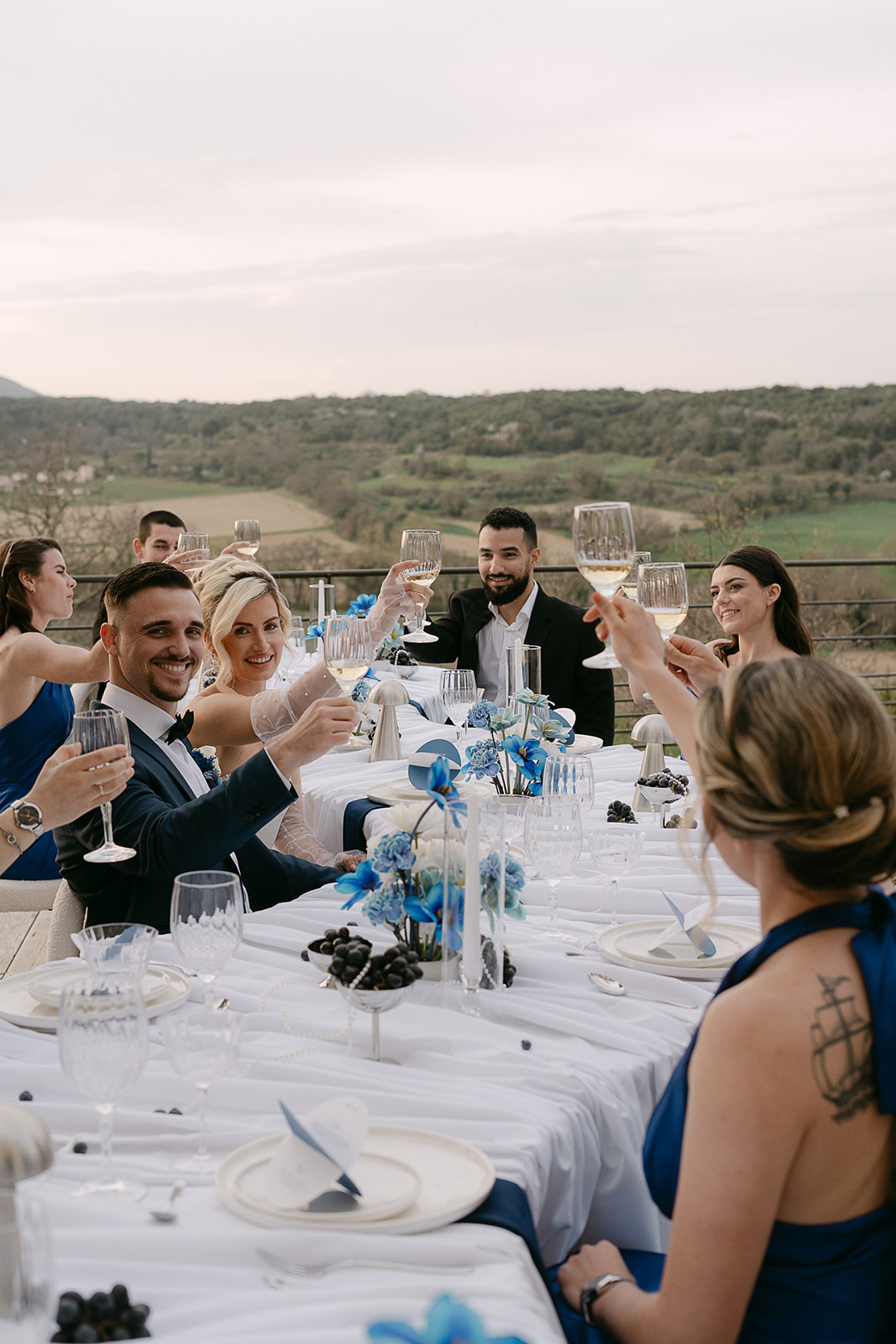
The wedding is no longer just an event.
It becomes a weekend.
For destination weddings, particularly in Provence and the South of France, this evolution makes a lot of sense. When loved ones come from afar, sometimes from several countries, the desire is naturally to make the most of the time spent together.
And the experience changes completely.
Conversations begin before the ceremony.
Families and groups of friends meet.
Guests take possession of the venue.
When the wedding day arrives, something already exists between them.
It is also particularly interesting material for a film: telling a wedding over several days allows for showcasing not only the ceremony but everything that has built up around it.
→ Read: Destination wedding in the South of France, why consider the video over the whole weekend
2. The experience of the guests takes up more space.
Another evolution seems particularly interesting to me: the wedding is no longer just thought about in terms of what the couple will see or photograph.
It is also thought about in terms of what the guests will experience.
This can involve live music during a cocktail, a more personal ceremony, a dinner designed as a true moment of sharing, immersive scenography, or simply an organisation that allows enough time to enjoy the venue and the people present.
The aim is not necessarily to do more.
It is often the opposite.
A wedding can be extremely well thought out while giving the impression that things are happening naturally.
For me, this is an important evolution.
Because the strongest memories do not necessarily come from a spectacular element.
They often come from an atmosphere.
From a dinner that comes alive.
From guests who start dancing much earlier than expected.
From a conversation that continues.
From a group that sings.
From a ceremony that suddenly takes an unexpected direction.
It is precisely these moments that then give the film its personality.
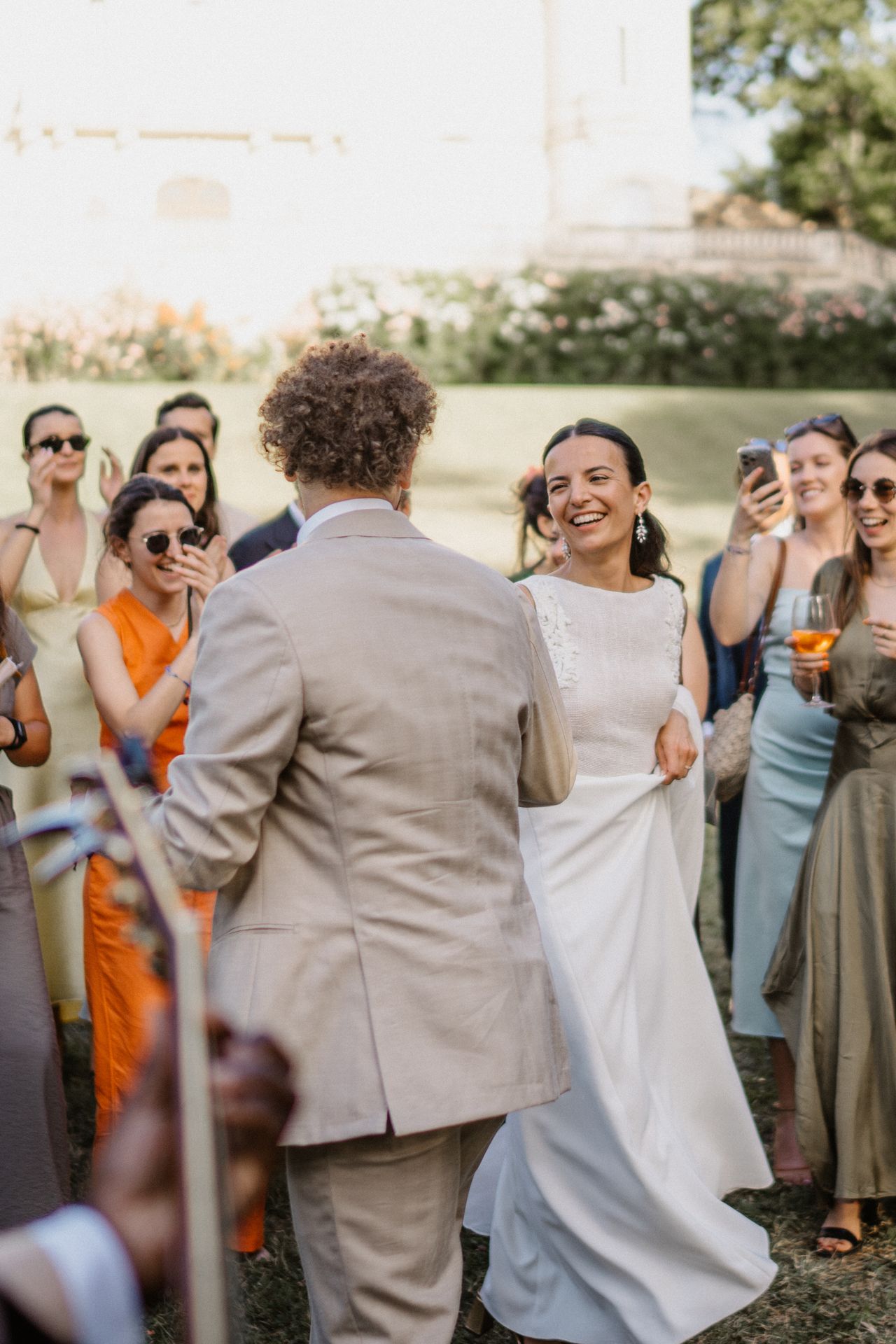
3. An editorial aesthetic, but increasingly less fixed.
The word editorial continues to hold an important place in the world of weddings.
But it no longer necessarily means posing for a long time in front of a perfectly controlled backdrop.
What interests me more today is the meeting between two worlds: a highly crafted aesthetic and a much more spontaneous way of experiencing it..
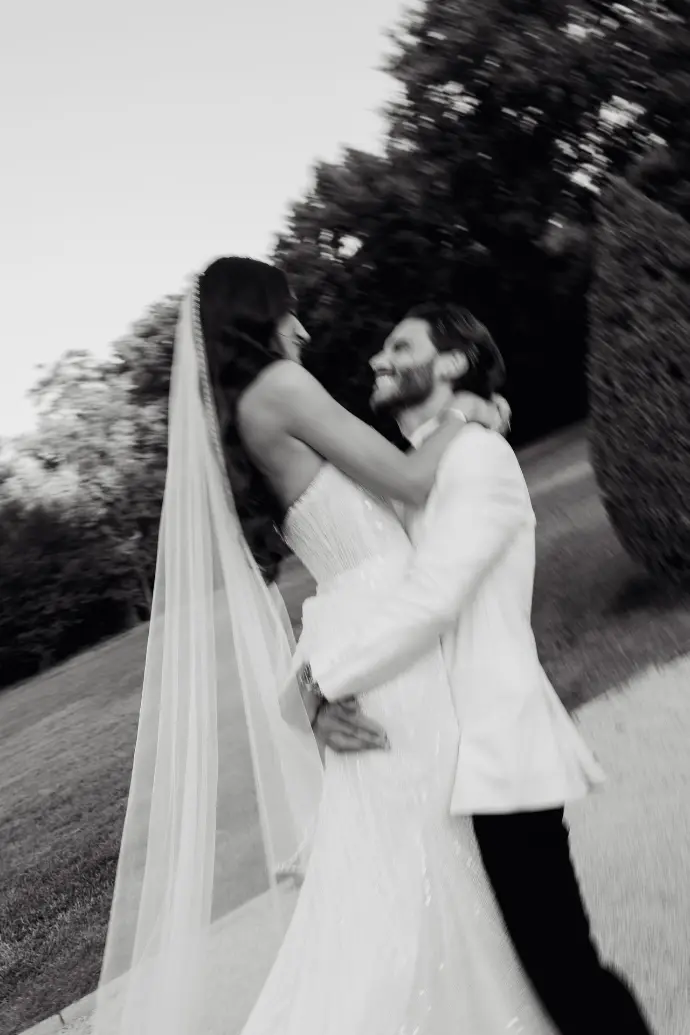
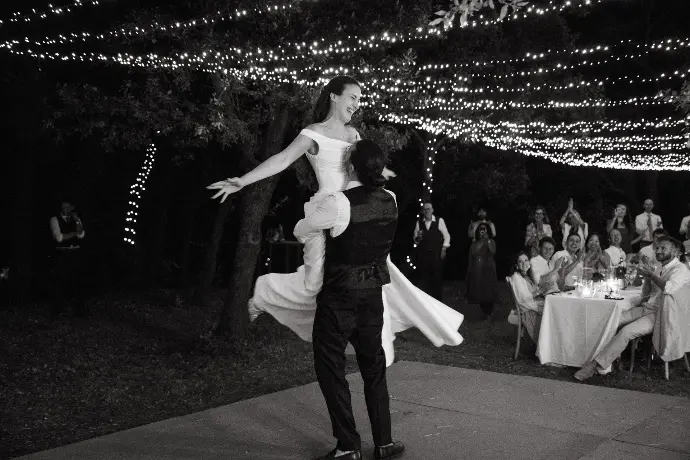
A black tie wedding can be extremely elegant and yet full of movement.
A perfectly set table can a few hours later be covered with glasses, burnt candles and chatting guests.
A very fashionable outfit can be filmed in a completely spontaneous scene.
It is precisely this contrast that brings life to the images.
In my way of filming, this evolution quite naturally corresponds to what I am looking for: to work the frame, the light and the colourimetry without asking the wedding to become a shoot.
The image can be constructed with precision without the moment itself being fabricated.
→ Read: Why your wedding film will not look exactly like the films you have seen on my site
4. Colour is coming back, but with more nuance.
After several years heavily marked by neutral palettes, colour is taking up more space.
Not necessarily in the form of extremely colourful weddings.
Rather, it is more personal associations that appear: natural shades combined with a more assertive colour, shades of green, earth tones, burgundy, chocolate or even brighter pastel colours.
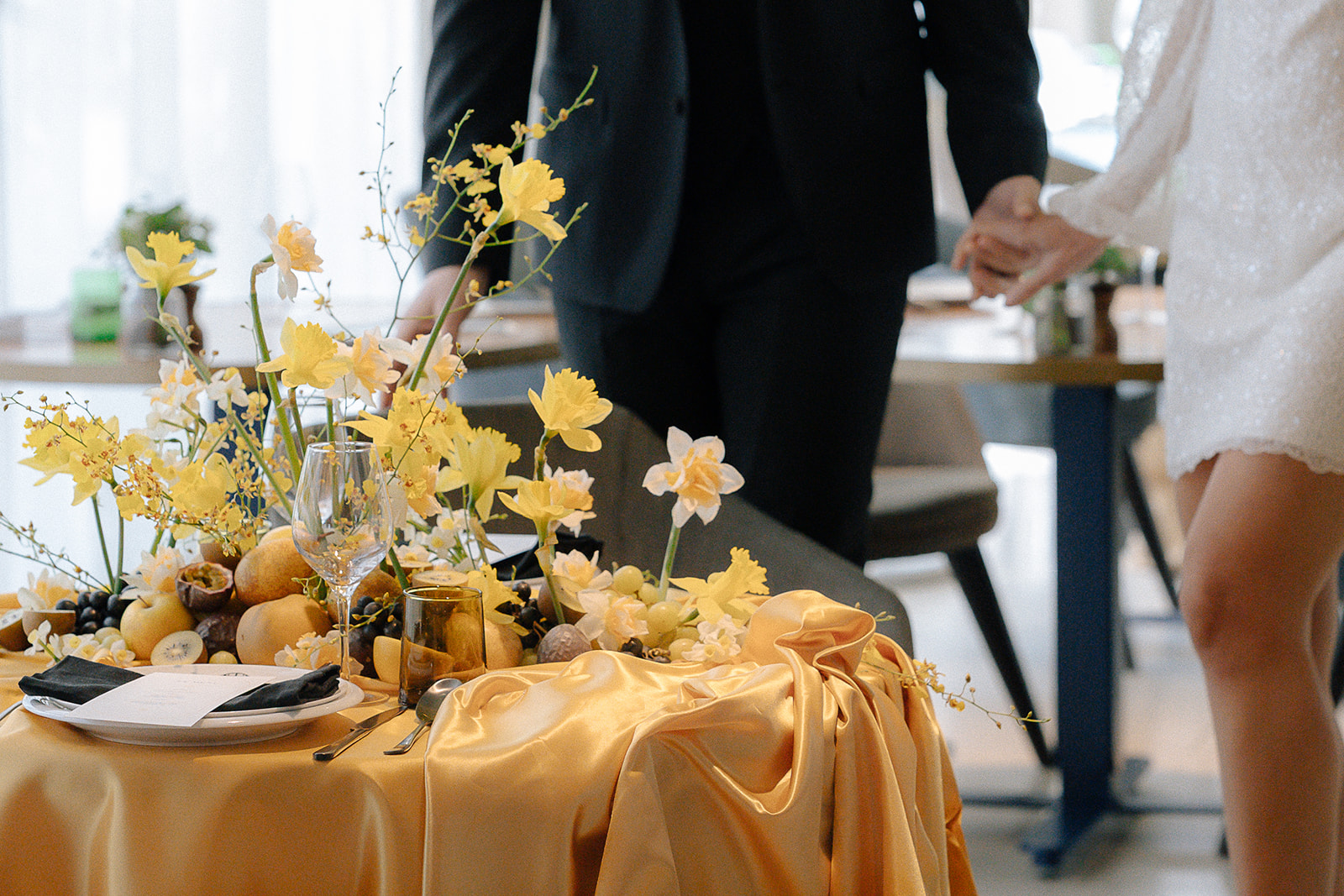
The butter yellow — jaune beurre — is notably one of the colours that we see appearing a lot in the inspirations for 2027.
It works particularly well in the South of France because it naturally dialogues with the light stone, the vegetation, the olive tones and the Mediterranean light.
But I am always a bit wary of the notion of "colour of the year".
A palette works when it truly belongs to the world of weddings, rather than having been chosen solely because it appears everywhere on Pinterest.
What I find interesting for 2027 is therefore less the return of a specific colour than the freedom to build a more personal visual identity.
5. Materials and details are becoming very prominent again.
The trends for 2027 also show a marked interest in materials.
Lace is making a comeback in bridal fashion.
Draping is taking up more space.
Fabrics are appearing in the scenography and signage.
Stationery is becoming more tactile.
Handmade details, drawings, ribbons or certain vintage-inspired elements reintroduce something less perfectly standardised.
It’s interesting because this evolution does not necessarily involve adding more decoration.
It is more about giving more character to what is already there.
A handwritten menu.
A textured tablecloth.
A piece of lace.
A flower chosen for a particular reason.
A family heirloom.
These are small elements, but they contribute to building the world of weddings.
And when they have meaning, they also become interesting to film.
Not simply because they are beautiful.
Because they belong to the story.
6. Several outfits for different moments of the wedding.
This evolution naturally accompanies weddings that take place over several stages.
The wedding outfit is no longer necessarily the wedding outfit.
Welcome dinner.
Ceremony.
Dinner.
Evening.
Brunch.
Each moment can have its own language.
This does not necessarily mean multiplying dresses or suits in a spectacular way.
A dress transformation, a change of accessories, or a second outfit more suited to the evening can be enough to create an evolution.
The bridal collections of 2027 show great diversity: lace, draping, revisited vintage references, asymmetries, shorter silhouettes, or very light colours.
For the film, these changes are interesting because they also contribute to the progression of the day.
The atmosphere evolves.
The light changes.
The outfits become more relaxed.
And gradually, the wedding shifts towards the celebration.
7. More personal ceremonies — and sometimes more disconnected.
Personalising a wedding is not just about its decoration.
The ceremony evolves too.
Couples are allowing themselves more to adapt traditions, choose the speakers, integrate their own texts, or build a ceremony that truly reflects their story.
At the same time, another desire appears: to rediscover moments without screens.
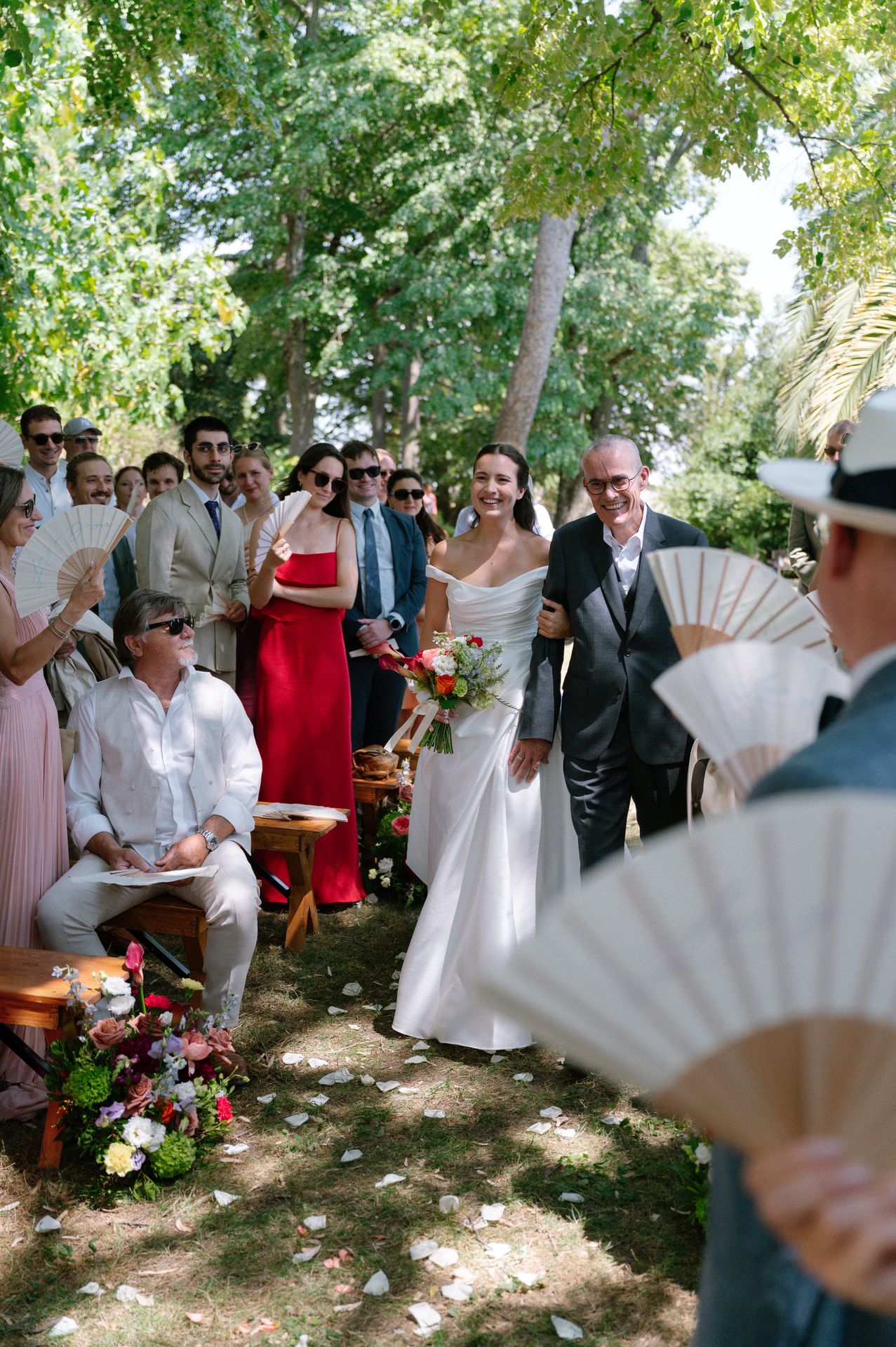
Some ceremonies are intentionally unplugged, with guests invited to put their phones aside for a few minutes.
I find this idea particularly interesting.
Not simply because it makes the photographer's or videographer's job easier.
But because it actually changes what we see.
When a bride enters a ceremony and sees the faces of her loved ones instead of a succession of raised phones, the experience is not the same.
And neither are the reactions.
8. Less perfection, more traces.
This is probably one of the developments I find most interesting.
While weddings have never been photographed and filmed as much, there is simultaneously a return to less technically perfect images.
Film cameras.
Polaroids.
Disposable cameras left for guests.
Direct flash.
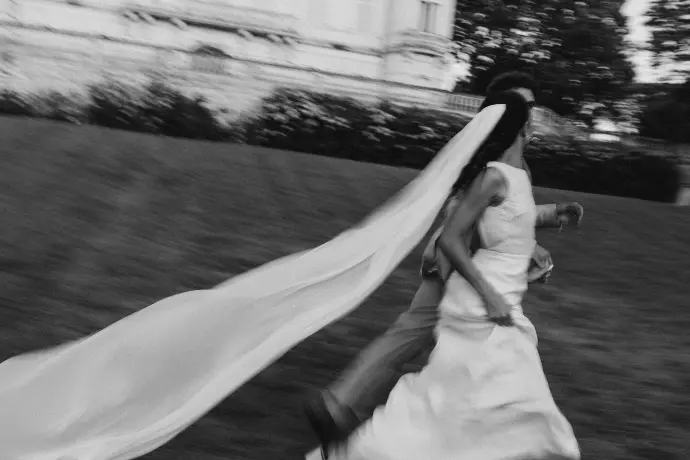
Slightly blurred images.
Movement.
This is not necessarily a rejection of professional images.
It is rather the desire to preserve multiple forms of memory of the same event.
A perfectly crafted image can coexist with a photo taken by a friend at two in the morning.
They simply do not tell the same story.
This search for spontaneity is also found in films.
I obviously care about the precision of my images and a consistent colour grading throughout the film.
But technical precision must not erase life.
A movement, a reaction, or an imperfection can sometimes tell more than a perfectly controlled shot.
The goal is not to make the wedding imperfect. It is to not erase what makes it alive.
9. The wedding becomes more sensory.
Another trend is emerging around the sensory experience.
Decoration remains important, but it is no longer the only way to create an atmosphere.
The music.
The light.
The food.
The scents.
The materials.
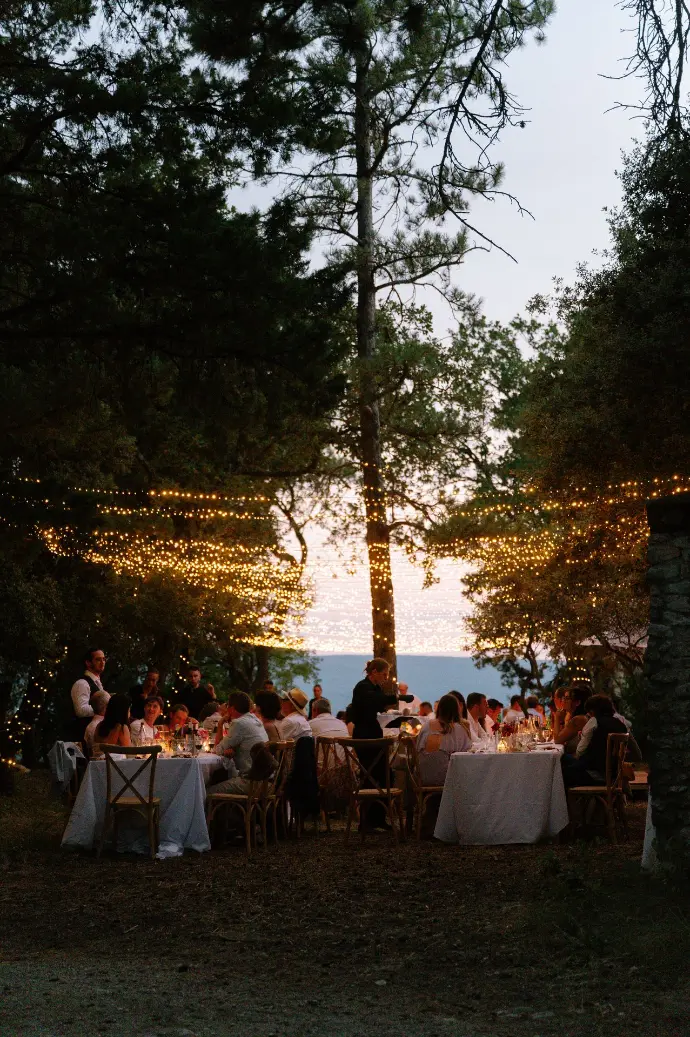
The way a space evolves between day and night.
All these elements contribute to what the guests will feel.
It’s an approach that I find particularly interesting because it reminds us of an obvious truth: a wedding is not made solely to be watched. It is made to be experienced.
Video has precisely this ability to preserve part of that experience.
The movement.
The voices.
The music.
The atmospheres.
The changes in energy.
A film will obviously never be able to recreate a smell or a taste.
But it can bring back many things that we thought we had forgotten.
→ Lire : Ce que le son révèle dans un film de mariage
10. Privacy also becomes a choice.
It is a trend that is less visually spectacular, but probably set to take up more space.
Not all couples want their wedding to be immediately visible on social media.
Some wish for the ceremony to remain phone-free.
Others prefer to limit the posts from their guests or suppliers.
And some simply want to decide for themselves what belongs to their private life and what can be shared.
This desire is not contradictory to our very visual era.
It may actually be a consequence of it.
A wedding can be extremely well thought out and perfectly documented without becoming an event intended to be published in real time.
It is also a question that I take into account in my way of working: being present to capture the day does not mean that everything must then become content.
What the wedding trends of 2027 really change.
Ultimately, what seems most interesting to me for 2027 is neither a colour, nor a flower, nor a style of dress.
It is the freedom with which couples begin to use all these inspirations.
A wedding can be black tie and extremely spontaneous.
Minimalist and very warm.
Editorial without being fixed.
Organised with precision while leaving room for the unexpected.
It can last one day or three.
Gather thirty people or many more.
Follow certain traditions and completely abandon others.
Coherence no longer necessarily comes from adhering to a style.
It comes from the couple.
And for the wedding film?
For me, this evolution is particularly interesting.
The more a wedding has its own identity, the less the film needs to try to create one.
The locations.
The people.
The choices.
The voices.
The gestures.
The music.
The energy of the dinner.
The way loved ones interact.
All of this already constitutes material.
My job then is to observe it, listen to it, and build the film from what actually exists.
With Harmony, this material comes from the wedding day itself.
With Signature, it can start much earlier: the couple's story, archives, voices, and sequences thought out together then engage in dialogue with the wedding.
Two ways to tell.
But in both cases, the same idea: the film must belong to the couple it tells.
→ Discover Harmony and Signature
→ Talk to me about your wedding
Photo credit: Gabriela Feyer I Anthony Luong I Maxime Bernadin I Camille Lopez