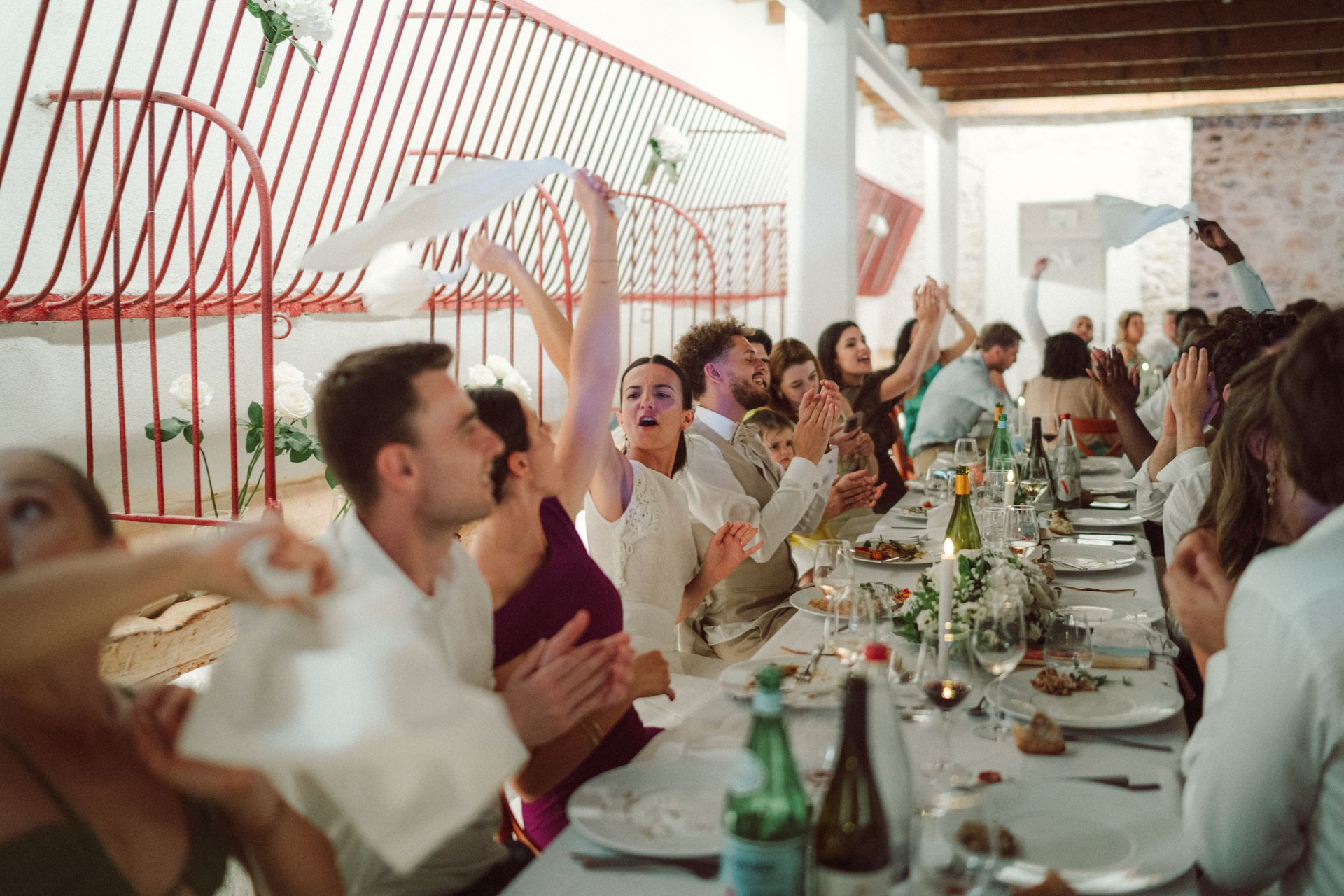
When preparing for your wedding, you choose very concrete things.
A venue. A meal. Flowers. An outfit. Decorations. Music. People who will be there to accompany this day.
And then there are the images.
At the time of booking a wedding videographer, you know the price of a film. But it is much more difficult to truly measure its value.
Because this value does not fully reveal itself on the day of the wedding. Nor even when you receive the film a few weeks or months later.
A wedding film remains the same. But its emotional value evolves with those who watch it.
And this is probably one of the strongest particularities of what we create.
A few weeks later, revisiting a day that went by very quickly.
The first times you watch your wedding film, the memories are still very close.
You find a voice, a look, a reaction that you hadn't seen. You sometimes discover what was happening elsewhere while you were busy experiencing something else.
But above all, you find an atmosphere.
The slightly trembling voice before a ceremony. The sound of guests arriving. A burst of laughter during the preparations. The way someone looks at you when you enter a room.
At that moment, the film first allows you to return to a day that has just ended..
This is often its primary value.
But it is probably not the most important.
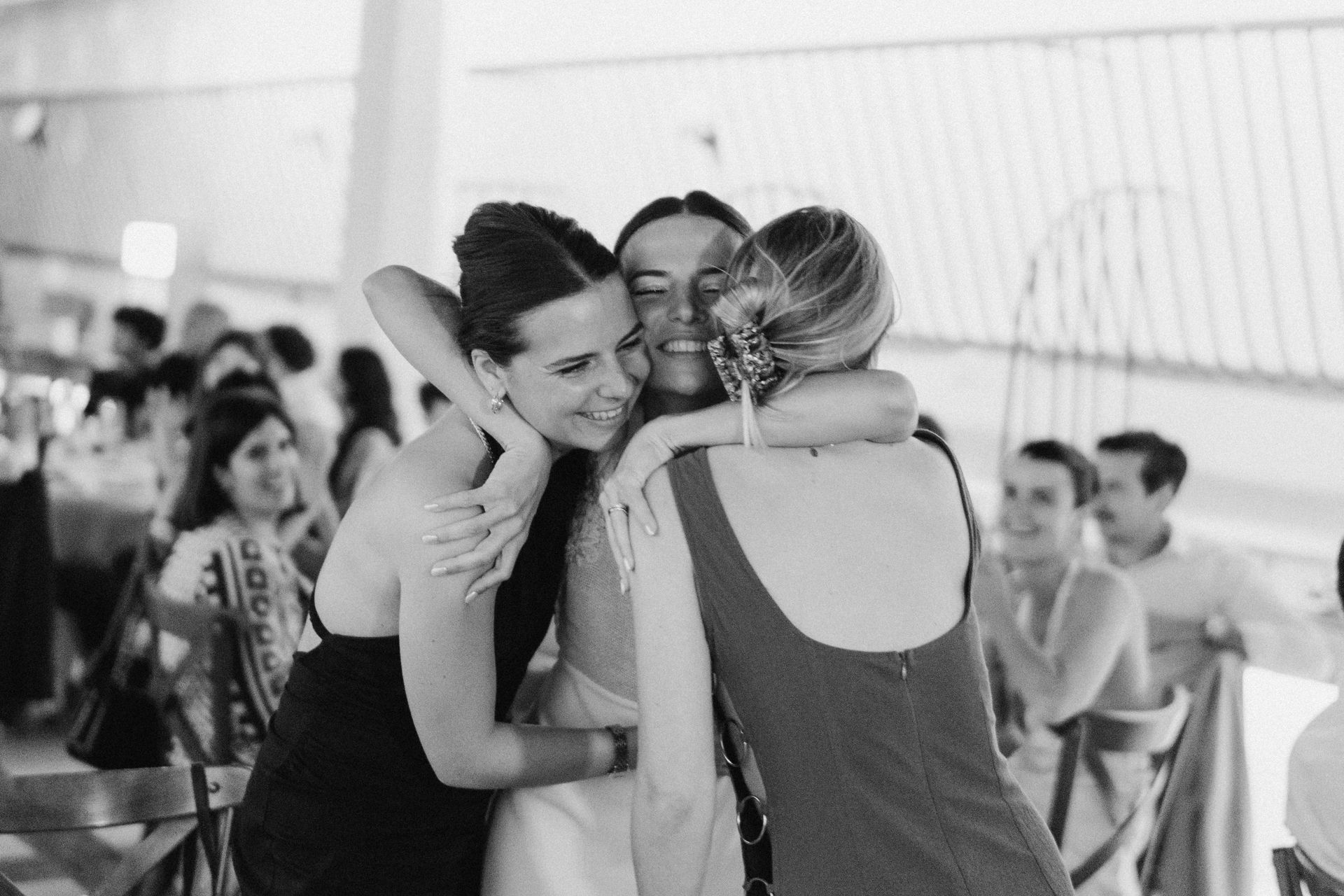
A few years later, we no longer watch exactly the same film.
The film itself has not changed.
The images are the same. The words spoken are the same. The people present are the same.
Yet, our way of looking at them evolves.
A speech that we mainly paid attention to for its humour can take on another dimension. A shot of a few seconds with one's parents or grandparents can become much more significant. A voice that we heard daily suddenly becomes something we are happy to be able to revisit.
Even certain details that seemed almost anecdotal at the time of the wedding end up telling a story.
A house. A way of dressing. A manner of speaking. A group of friends. The faces of a family at a specific moment in its history.
The film then no longer documents just a wedding. It also begins to document a part of your life.
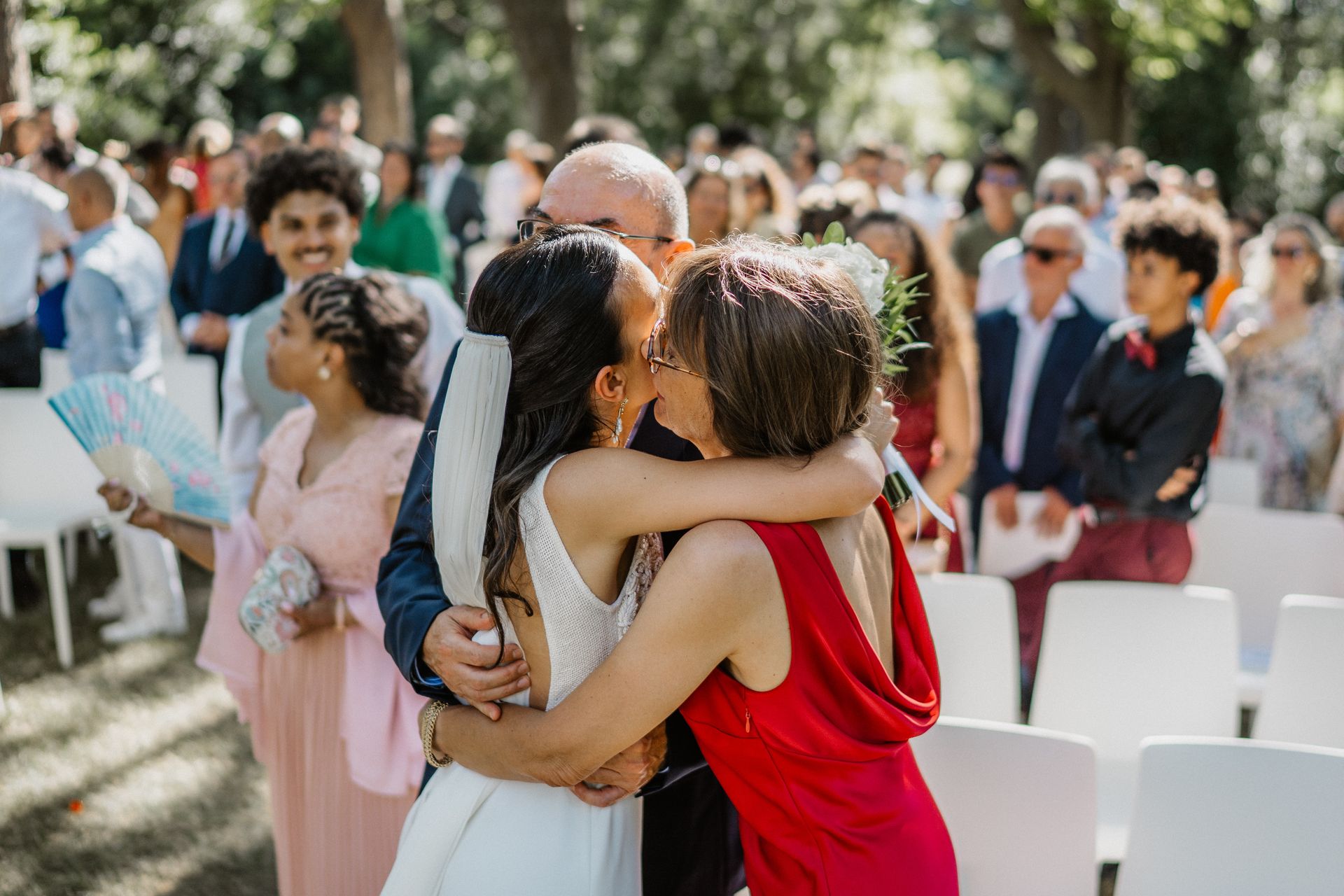
We choose our film before knowing which memories will become the most precious.
Perhaps this is what makes this object so special.
When organising one's wedding, no one can know which images will hold the most value in ten, twenty, or thirty years.
We can imagine that the vows will be important. That the entrance to the ceremony will remain a strong memory. That the first dance or the speeches will be among the moments we will love to revisit.
But we cannot anticipate everything.
Sometimes, it will ultimately be a much more discreet sequence.
The voice of a grandmother.
A father adjusting a detail of the outfit before leaving.
Friends laughing in the background of an image.
An almost trivial conversation.
A hand resting for a few seconds on a shoulder.
You choose your wedding film before knowing which memories will become the most precious.
That is also why I pay so much attention to the moments that exist around the major events of the day.
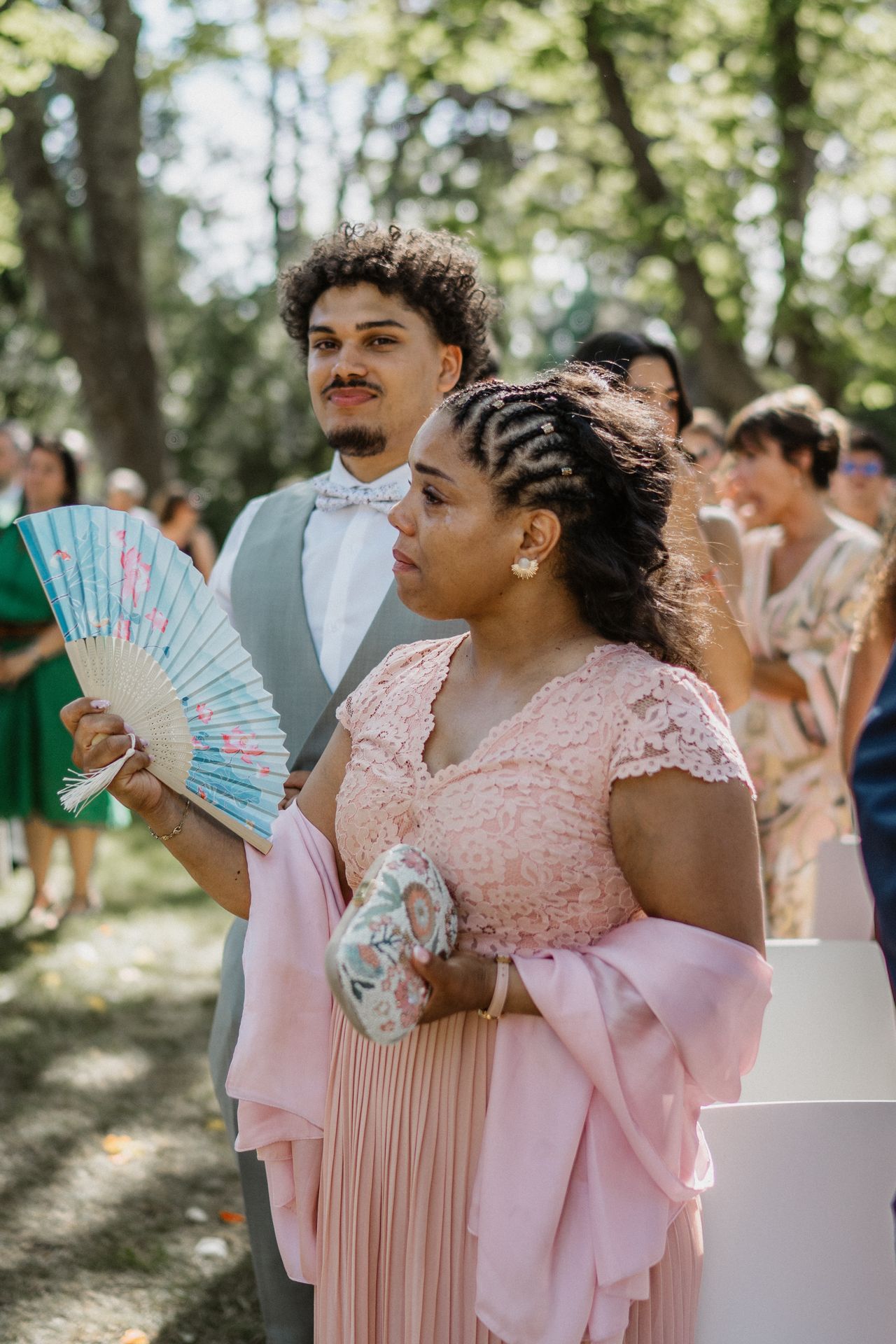
A photograph captures a moment. The film also captures a voice, a movement, a presence.
Photography and video do not have to be opposed. They simply do not preserve memories in the same way.
A photograph can summarise a moment in an extremely powerful image.
The film adds another dimension: time.
A person is no longer just present in an image. They move. They speak. They laugh. You can hear their intonation, their way of looking, sometimes their hesitations or silences.
And over the years, these elements can become extraordinarily precious.
We think a lot about images when talking about wedding video. Yet, the sound is probably one of the things whose value evolves the most over time.
Hearing a voice again twenty years later is not the same experience as hearing it again a few weeks after the wedding.
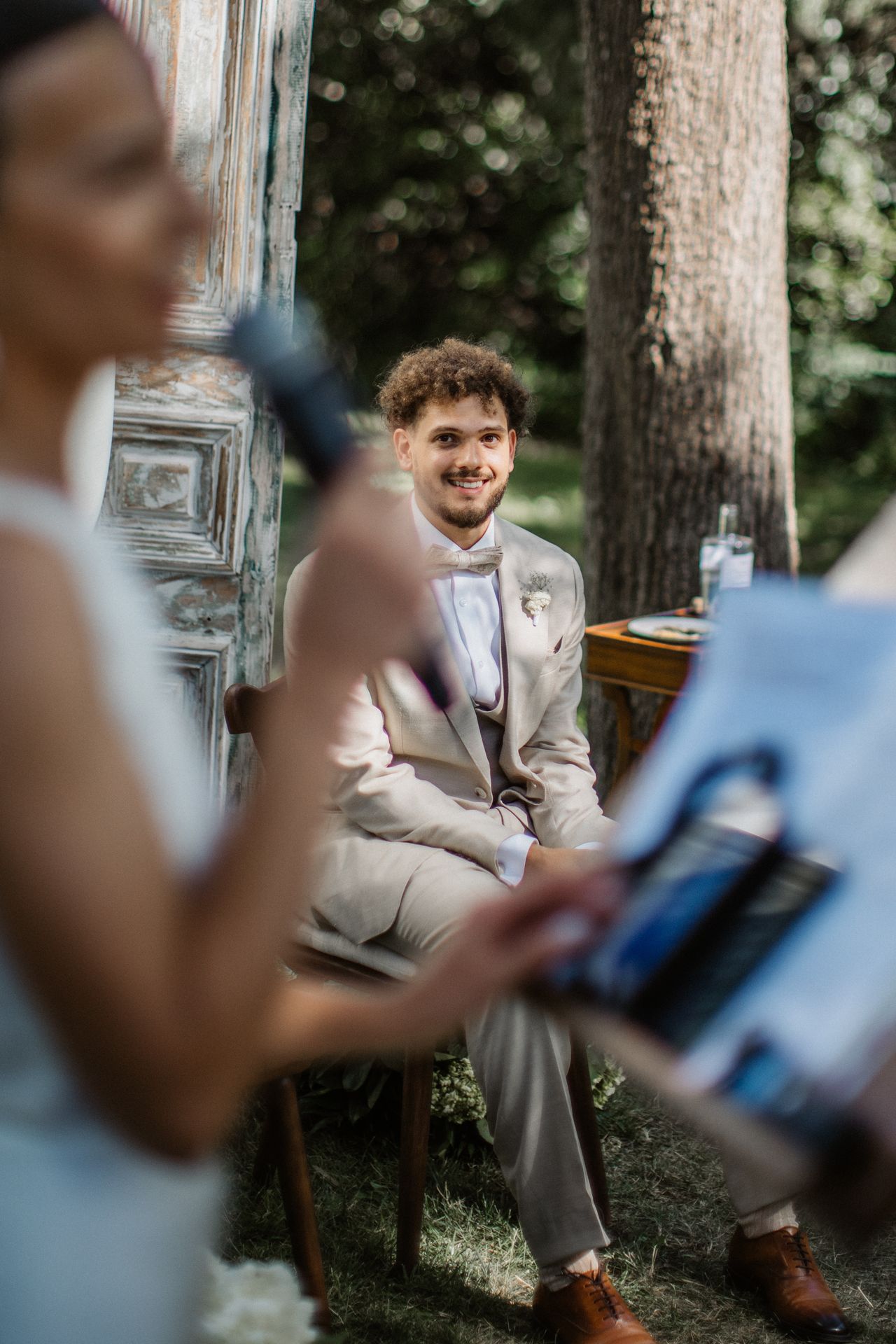
A wedding film also becomes a family archive
This idea is rarely the first one that comes to mind when booking a videographer.
And it makes quite a lot of sense.
At the time of the wedding, one first thinks of their couple, their loved ones, and the day they are preparing.
Then time passes.
A family can grow.
And one day, children may watch these images.
They then discover their parents before they were their parents. Their grandparents a few years younger. Family members they know differently — or whom they may have never known.
They hear stories. Speeches. Voices.
They also discover a day they may have known about forever, but to which they were not present.
At that moment, the film is no longer just the memory of a couple.
It becomes a small family archive.
Sometimes it is the newlyweds themselves who understand this immediately
After watching their film, one of my couples sent me this message:
« We saw everything and it’s incredible, really! The storytelling quality, the candid details that change everything, the perfectly placed words. It’s just WOW. We didn’t expect such a crazy result, it’s just beautiful. We are so proud to be able to show such a deep and personal wedding film to our children later. »
What I particularly love about this feedback is not just their reaction to the film.
It’s that last sentence.
Barely discovered the film, they are no longer thinking solely of the memory they have just received. They think about what it might become later.
To their children.
About the possibility of showing them one day who they were, the people who surrounded them and what was said that day.
It is probably one of the dimensions of a wedding film that is least measured at the time of booking.
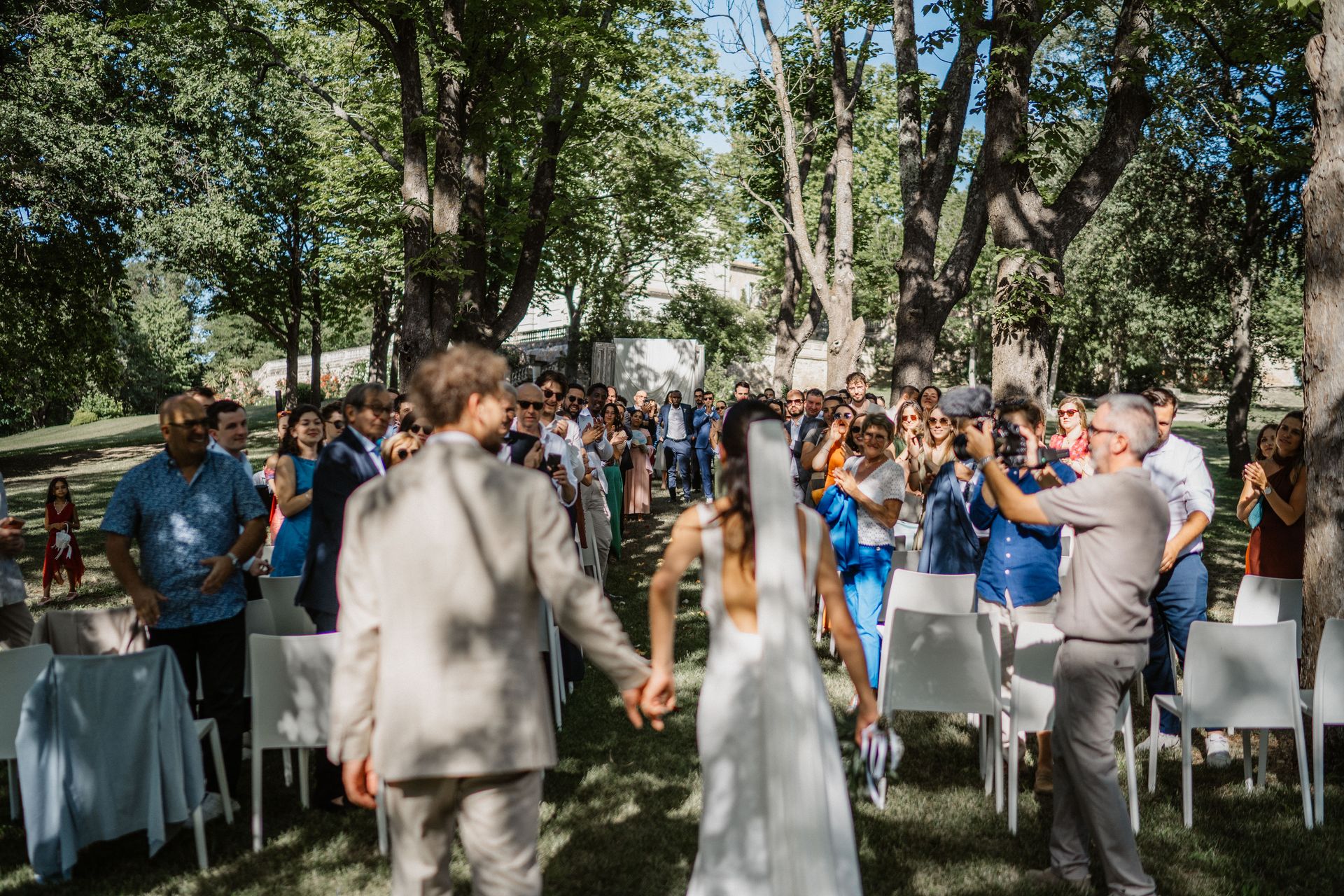
The value of a film is therefore not fixed at the moment it is received.
There is something quite paradoxical about a wedding film.
Its price is known before the wedding.
Its duration is known when it is delivered.
Its content will not change afterwards.
But its value, on the other hand, is not fixed.
Today, one can watch their film to regain the energy of a day.
A few years later, one can look more at the people who surrounded us.
Even later, one can linger on a voice, a gesture or a presence that we hardly paid attention to during the first viewings.
It is not the images that have changed. It is our story since they were filmed.
And it is precisely this that makes it difficult to compare the value of a film on the day one books their videographer and the value it may have years later.
Is a very long film necessarily required to preserve all this?
Not necessarily.
The value of a film does not solely depend on the number of minutes it contains.
It depends greatly on what we decide to keep in it.
In my films, I give significant importance to people, voices, glances, and interactions. I obviously seek to create aesthetic images and a coherent narrative, but not at the expense of this real material.
A film of five to seven minutes can contain an enormous amount when they have been chosen for what they convey.
And for couples who wish to keep more of their day, a longer film or certain complete sequences can complement this initial approach.
The goal is not necessarily to keep everything.
It is also to know what deserves to remain.
What will remain of your wedding in twenty years?
It is obviously impossible to answer today.
And that is precisely the whole point.
Some things that we consider essential during the preparations will probably have lost their importance.
Others, which we hardly thought about, will have gained a lot.
A glance.
A voice.
A laugh.
A few words spoken during a speech.
The way your parents looked at you that day.
Your friends gathered in the same place.
People whom life may have distanced.
And you two, at that precise moment in your story.
That is why I do not really consider a wedding film as something whose value can be completely measured at the moment it is ordered.
The film remains the same. Life around it does not.
And over time, it is sometimes a few seconds that one would never have thought essential that become the ones one is happiest to have preserved.