
On the day of a wedding, I film several hours of material.
Anticipated moments.
Others that no one had anticipated.
Glances, gestures, voices, silences, almost imperceptible reactions and sometimes scenes that suddenly take on much more importance than expected.
Yet, the final film lasts only a few minutes.
Between the two, there is the editing.
And for me, editing a wedding film is not simply about selecting the most beautiful images of the day.
It is necessary to understand what happened, find the connections and decide what truly deserves to remain.
Editing is the place where images become a narrative.
Everything starts with the material from the wedding.
When I start an edit, I do not immediately look for a succession of beautiful images.
I first seek to rediscover the day.
The preparations.
The ceremony.
The reactions.
The speeches.
The cocktail.
The moments spent with loved ones.
The evening.
But I also listen again a lot.
A phrase spoken during a ceremony can suddenly give a different meaning to images filmed several hours earlier.
A speech can reveal a relationship that I had only partially perceived on the wedding day.
A reaction filmed almost instinctively can become important when placed alongside a few words.
It is at this moment that certain threads begin to appear.
I am not trying to invent a story. I am trying to understand the one that the material allows me to tell.
Rushes are already about making choices.
A short wedding film obviously cannot contain everything that has been filmed.
And that is not its objective.
A large part of the editing is therefore about choosing.
An image can be very beautiful and ultimately not appear in the film.
Conversely, a much more discreet shot can become essential because it tells something about the couple or their loved ones.
It is probably one of the least visible parts of the work.
Preserve.
Discard.
Go back to a sequence.
Compare two reactions.
Find a voice.
Understand that a moment which seemed secondary on the day itself ultimately brings an essential breath to the film.
The quality of the editing depends as much on what we decide to remove as on what we keep.
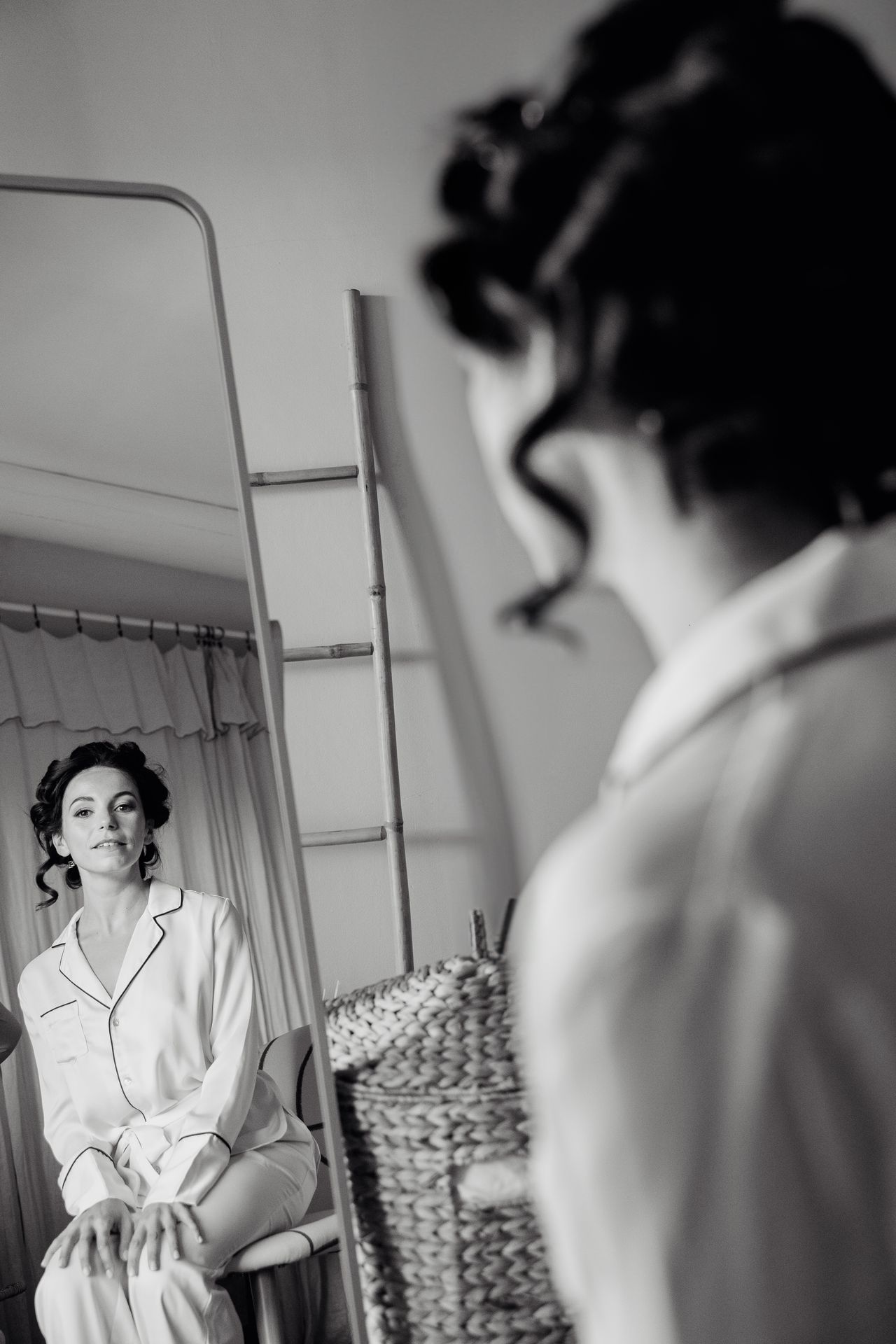
A short film is not a chronological summary.
This is an important distinction in my way of working.
A film of 5 to 7 minutes does not function to condense the entire day while necessarily respecting its chronological order.
It can circulate within the wedding.
A phrase spoken during a speech can accompany the preparations.
A reaction filmed during the ceremony can resonate later.
A moment of celebration can be interrupted for a few seconds by something much more intimate.
These connections allow for the construction of a continuity that did not necessarily exist in the chronology.
It is not about altering what has happened.
It is offering an interpretation of what has been experienced..
For couples who also wish to rediscover the flow of their day in its natural order, the complementary long film serves another purpose: to preserve more moments and a more chronological structure.
The two films therefore do not have the same role.
Finding a thread without imposing it.
I sometimes discover quite quickly what a film can be built around.
In other weddings, this takes more time.
The thread can come from a particularly strong family relationship.
From a speech.
From an energy that flows throughout the day.
From a way of being together.
Or from several much more discreet elements that end up responding to each other.
I am not necessarily looking for a grand idea or a demonstration.
The thread can be extremely simple.
The important thing is that it truly belongs to the wedding.
This is what allows two films made with the same approach to never have exactly the same structure.
Voices can shift the images.
Sound obviously plays a major role in this work.
But rather than developing all the sound work of the film here, there is a particularly interesting aspect to the editing: a voice allows the narrative to flow through time.
I can hear someone speaking during a ceremony while showing something else.
Returning to the preparations.
Showing a relative.
A gesture.
A landscape.
A reaction.
The image is no longer obliged to literally illustrate what we hear.
It can respond to the voice, extend it or provide another piece of information.
This is one of the reasons why I place so much importance on recording voices and real sounds during a wedding.
→ What sound reveals in a wedding film
Music does not solely determine the rhythm.
Choosing music is important.
But the rhythm of a film does not simply come from the tempo of a piece.
It also comes from the duration of the shots.
Voices.
Real sounds.
Transitions between different intensities.
And moments when we decide, precisely, to slow down.
I can let an image last longer because a glance deserves a few extra seconds.
At another moment, several very short shots can convey much more accurately the energy of an entrance or a dancefloor.
The editing must be able to speed up, slow down and breathe.
The rhythm must follow what the film is telling, not the other way around.
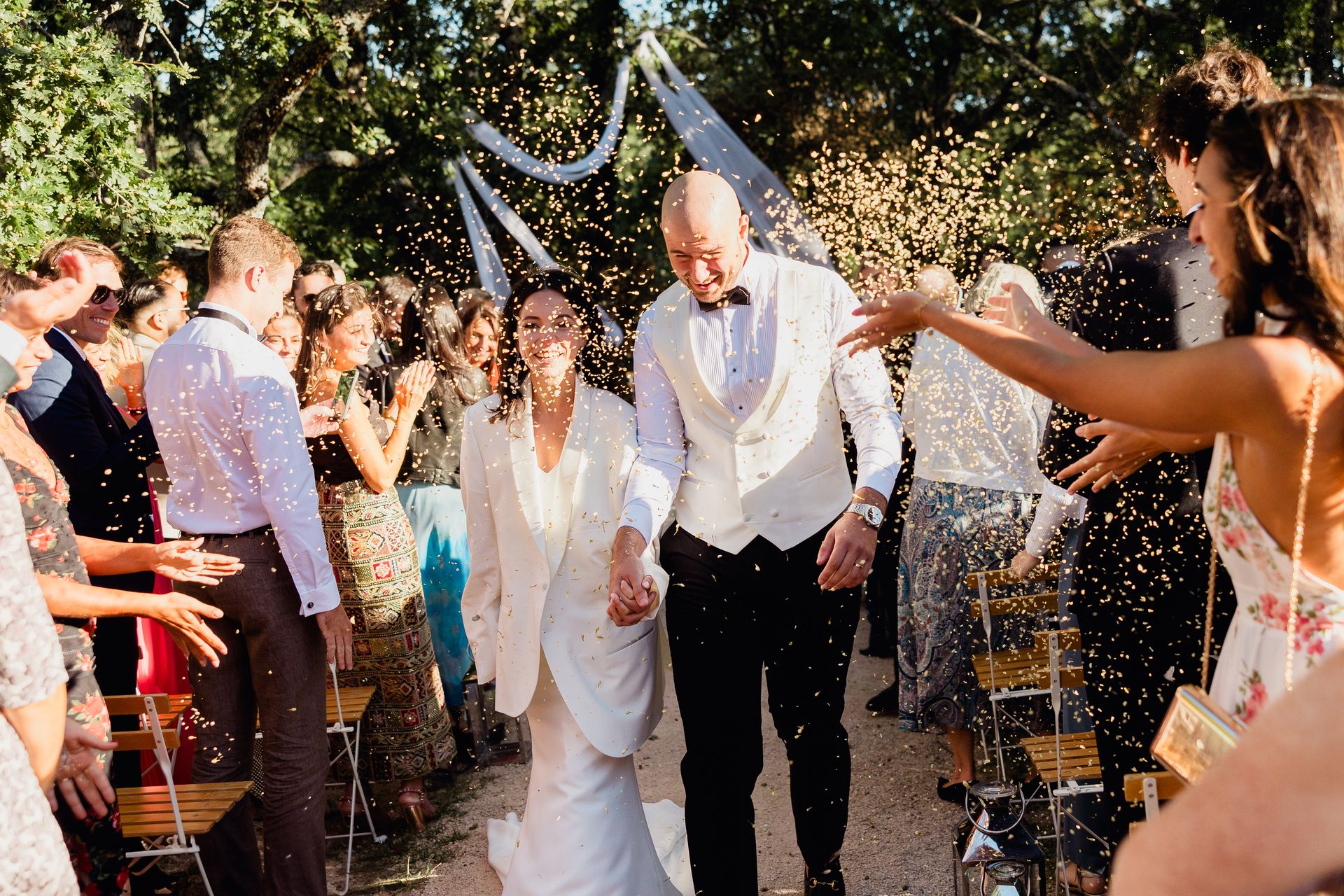
A beautiful image does not always have its place in the film.
It is probably one of the most difficult choices in editing.
Some images work perfectly on their own.
They could become a reel, an Instagram post, or simply a very beautiful sequence to show.
But in the film, they sometimes interrupt something.
They unnecessarily slow down a scene.
They repeat information.
Or they draw so much attention to their aesthetics that they distract from the narrative.
In that case, I prefer to remove them.
Because I am not building a succession of shots intended to demonstrate what I have managed to film.
I am building a whole.
And the coherence of the film must come before the value of an isolated image..
Harmony: discovering the narrative in editing.
This is particularly important in my formula Harmony..
On the wedding day, I do not arrive with a script that the couple should follow.
I film what exists.
The looks.
The gestures.
The voices.
The silences.
The relationships and the energy of the day.
It is then in editing that this material is explored and the film gradually finds its structure.
The narrative is therefore essentially born from what the wedding has offered me.
Without intervention. Without staging.
Signature: when the editing relies on a story worked on beforehand.
With Signature, the editing relies on a broader material.
The narrative work began before the wedding.
We talked about the couple's story.
Archives may have been selected.
Recorded voices.
Some sequences may have been imagined beforehand.
The editing must therefore no longer only include what the big day tells.
It must engage this day with everything that existed before it.
The logic remains the same: to select, to bring closer, and to give form to the material without trying to make it tell something it does not.
It is the source of the narrative that changes.
→ Discover Harmony and Signature
Editing as writing of the real.
It is probably the expression that best summarises my way of working.
I do not consider editing as the final technical step after filming.
It is a true writing.
A writing made of images, voices, sounds, music, and silences.
One must choose what to show.
What to bring closer.
What to let last.
And what to remove.
Sometimes, a construction appears quickly.
Sometimes, one must try, go back, and move the same elements several times before the film finds its balance.
It is precisely this work that allows one to go from several hours of material to a few minutes that possess their own coherence.
The wedding has already taken place. The editing does not rewrite it: it seeks the most accurate way to tell it.
crédit photos : Maxime Bernadin