
Cinematic. Documentary. Editorial. Natural. Authentic. Emotional. Narrative.
When looking for a wedding videographer, these words appear everywhere: on websites, social media, in brochures or film descriptions.
They provide a first idea of a universe. But they can also create some confusion.
Because a documentary film can be extremely aesthetic. A natural film can require a lot of work. An editorial film is not necessarily static. And a narrative film does not mean that one invents a story.
These words do not necessarily describe categories between which one must choose.
They rather speak of different dimensions of a film.
And to know if a videographer's work really suits you, it is often more interesting to look at how these dimensions coexist than to seek the label that defines their style.
A "cinematic" film: what are we really talking about?
It is probably one of the most used terms to talk about wedding video.
And yet, there is no single definition of a "cinematic wedding film".
One generally thinks of a particularly crafted image: the lighting, the compositions, the movements, the focal lengths, the depth of field, the music, the colour grading…
Everything that contributes to giving the film a true visual identity.
This aesthetic dimension matters a lot.
An approximate frame, an image that moves for no reason or a colour grading that changes abruptly from one shot to another can immediately take us out of a film.
But a beautiful image does not necessarily tell something.
One can film a couple in extraordinary light, amidst a spectacular landscape, and obtain a superb image.
This does not necessarily teach us who these two people are.
Aesthetic gives form to the film. It does not always suffice to give it meaning.
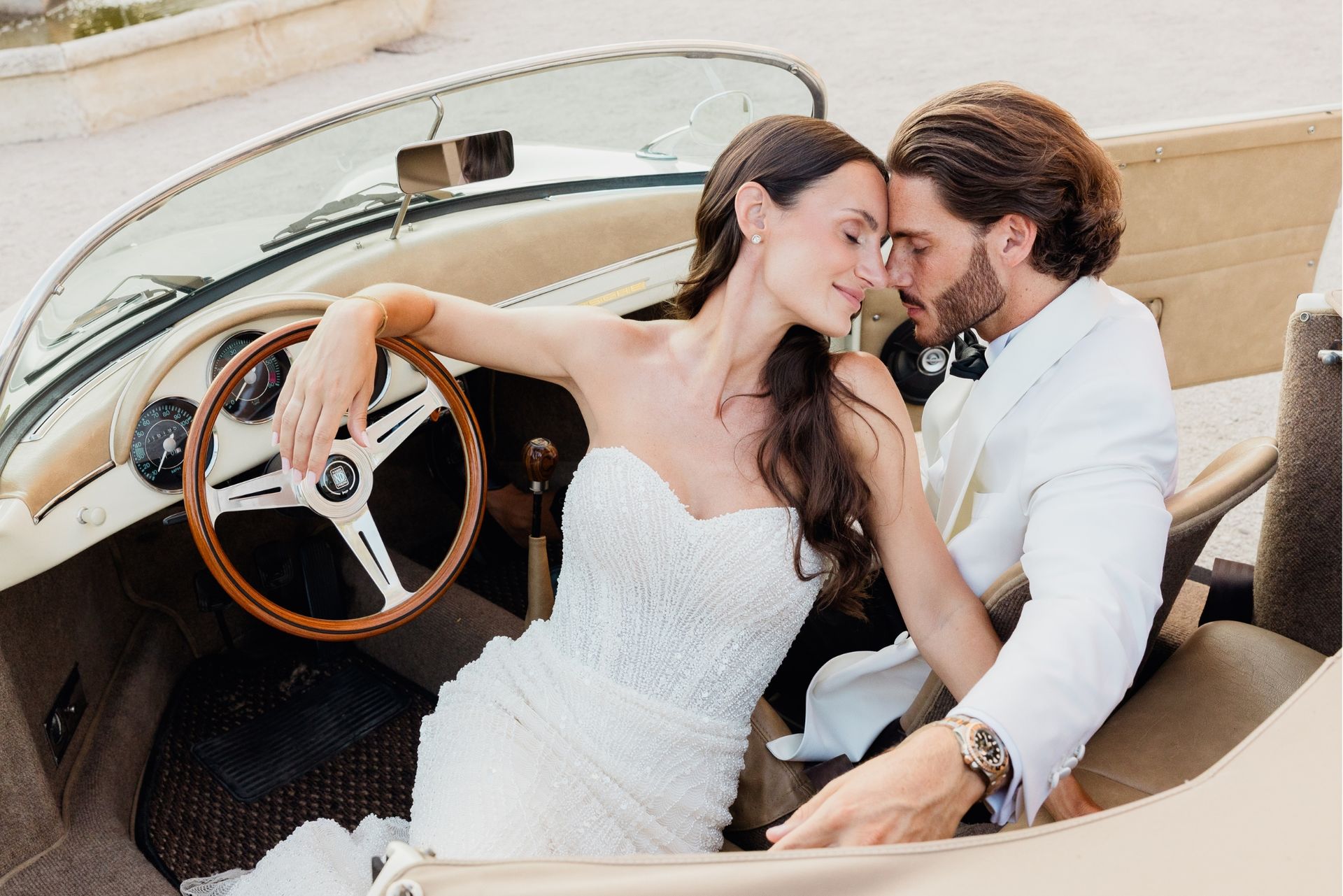
"Documentary" does not mean letting a camera run.
The term documentary can almost give the opposite impression.
One sometimes imagines a camera that simply records what happens, without intervention and without real visual construction.
However, a documentary approach can be extremely crafted.
Not provoking a situation does not mean not making choices.
Where to position oneself?
Which focal length to use?
Should one stay close or take a distance?
Which person to observe?
What is likely to happen in a few seconds?
What background will allow for a readable image?
Should one change position now to be ready when something starts?
All these decisions exist even before pressing the record button.
The difference is simply that one tries to adapt to what is happening rather than asking what is happening to adapt to the camera.
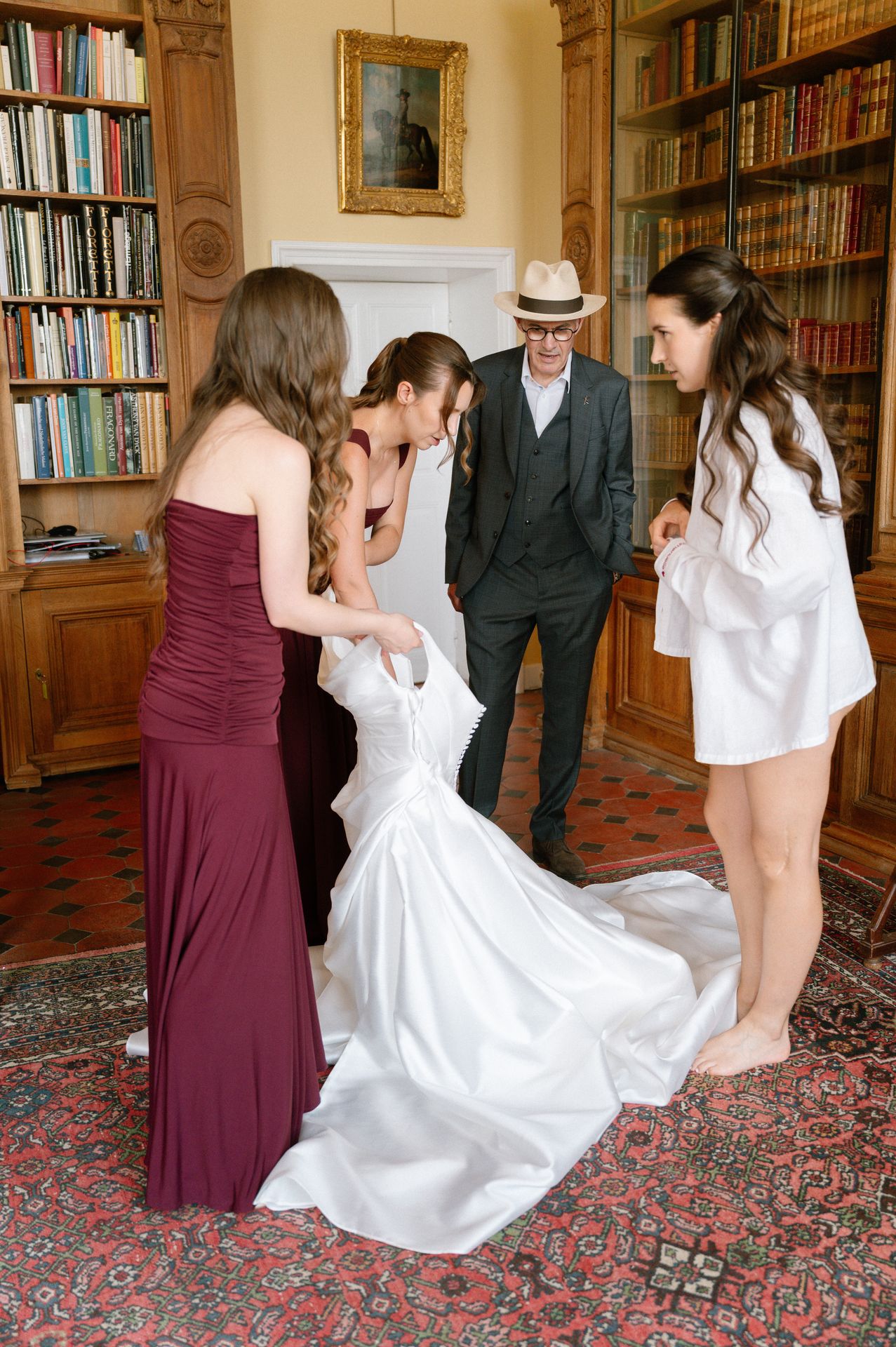
It is an approach that I place a lot of importance on during a wedding.
I generally prefer to anticipate a moment rather than ask to reproduce it.
A natural film is not a raw film.
This is probably one of the most interesting confusions.
When we say that a film appears natural, it does not mean that it has not been worked on.
On the contrary.
A spontaneous image may have been anticipated a few seconds earlier.
It may have been carefully framed.
Its colour grading may have been worked on to remain perfectly consistent with the rest of the film.
The sound may have been cleaned, balanced, and mixed with an atmosphere recorded elsewhere.
And in editing, several hours of material may have been needed to select a few seconds.
The work can be invisible without being absent.
This is often what I am looking for.
Technique, framing, colour grading, or editing should not become the main characters of the film.
They are there to allow the viewer to stay with the people and what they are experiencing.
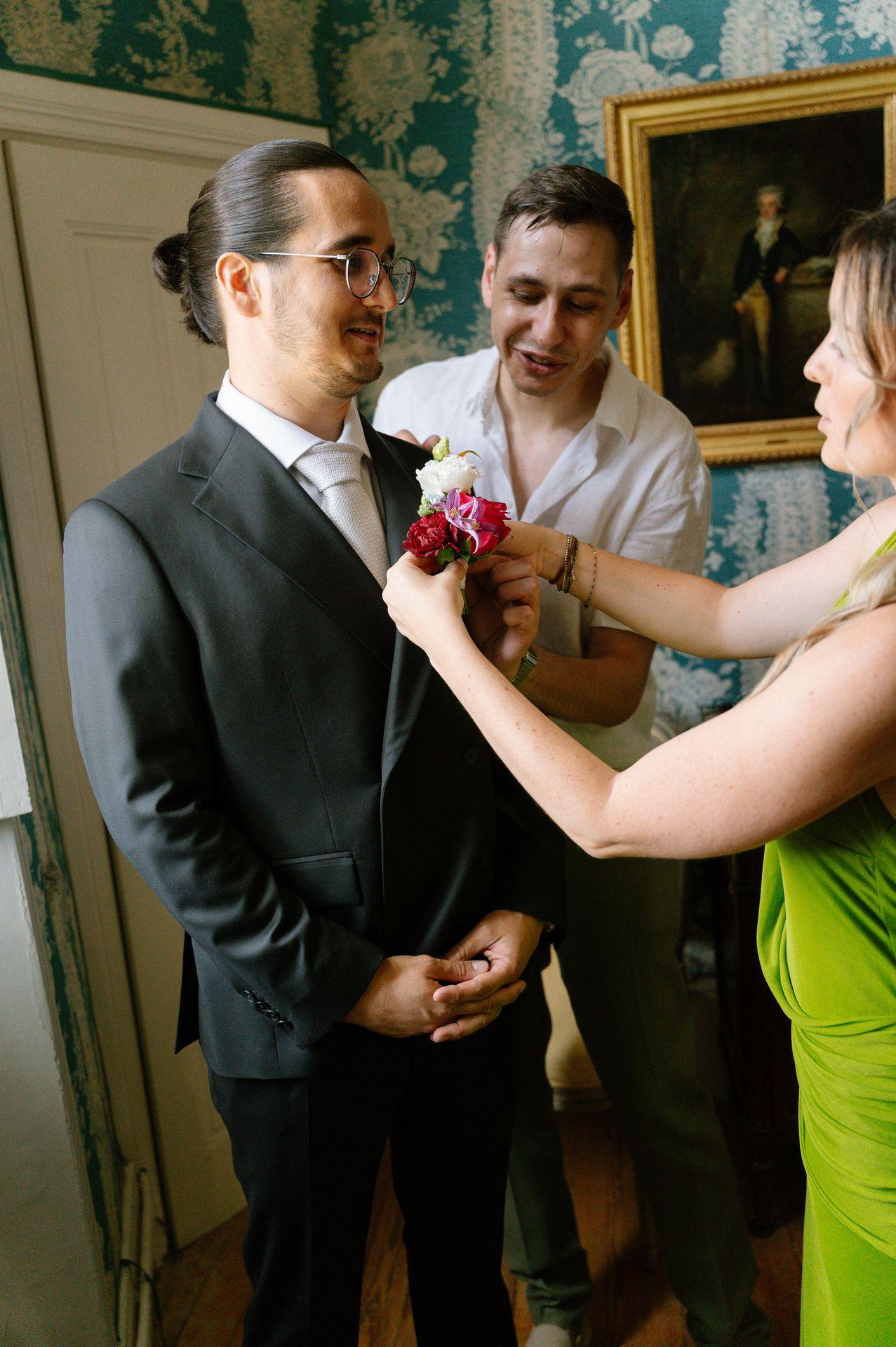
"Editorial" does not necessarily mean posed.
The word editorial comes more from the world of fashion and photography.
In a wedding, it can translate into particular attention paid to compositions, materials, architecture, clothing, details, or a more pronounced aesthetic.
Sometimes through more graphic images.
Unusual framing.
A black and white.
A silhouette.
A movement.
A detail that does not necessarily need to tell something immediately but contributes to the visual identity of the film.
This does not mean that everything must be staged.
An editorial image can perfectly appear in the middle of a totally spontaneous moment.
It is even this mix that I find interesting.
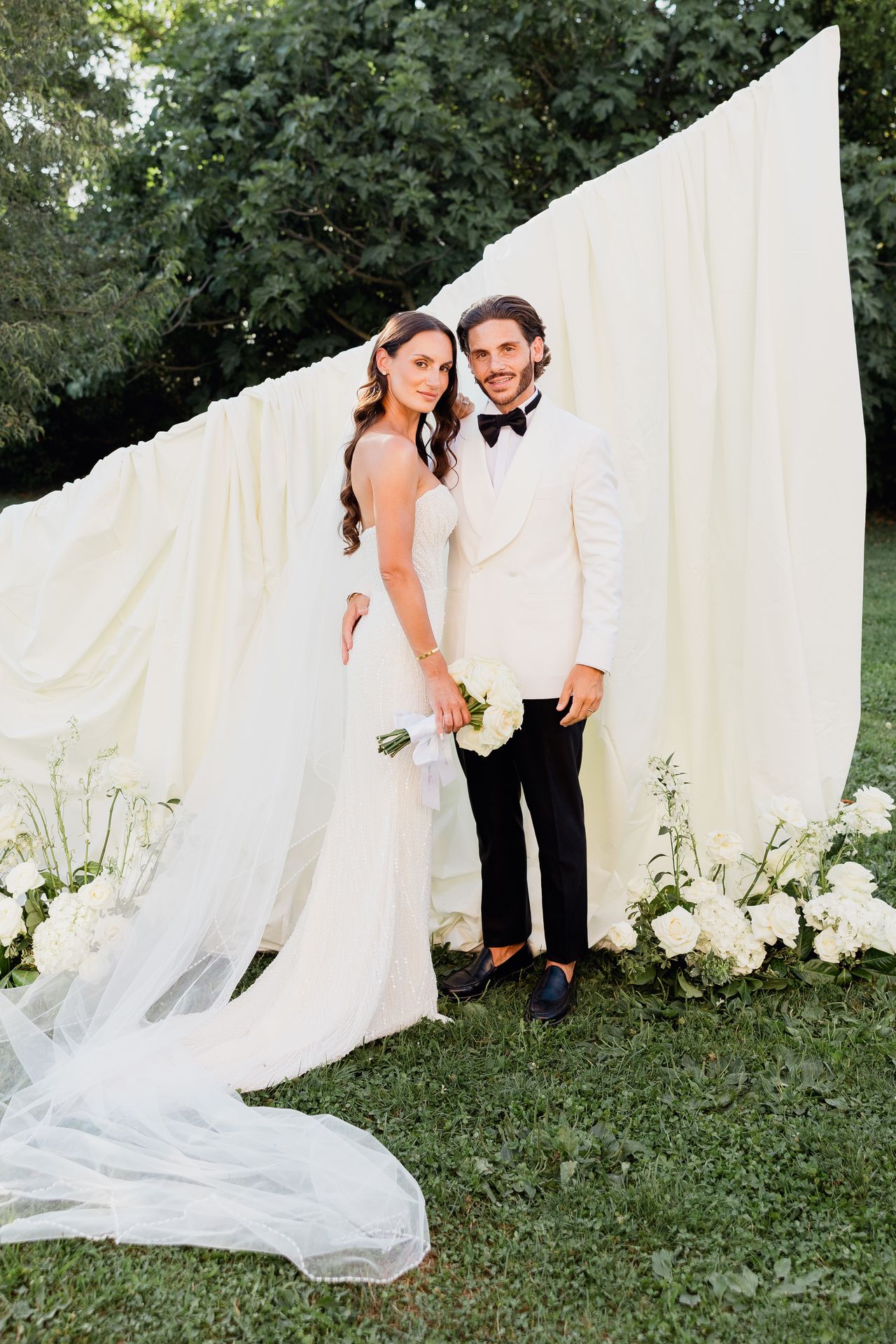
The aesthetic is no longer a parenthesis separate from reality.
It becomes a way of looking at it.
“Emotional” does not mean seeking tears.
A wedding film is obviously linked to emotion.
But emotion is not limited to tears.
It can be spectacular.
It can also be almost invisible.
A huge burst of laughter during a speech.
A tension a few seconds before a ceremony.
A grandmother who speaks.
A father who doesn’t really know what to say.
Friends who scream during an entrance.
A silence.
A hand searching for another hand.
A whole room that changes energy in a few seconds.
Emotion is not an aesthetic. It is a substance.
And this substance is different at every wedding.
This is also why I prefer to seek it in what actually happens rather than trying to fabricate it for the film.
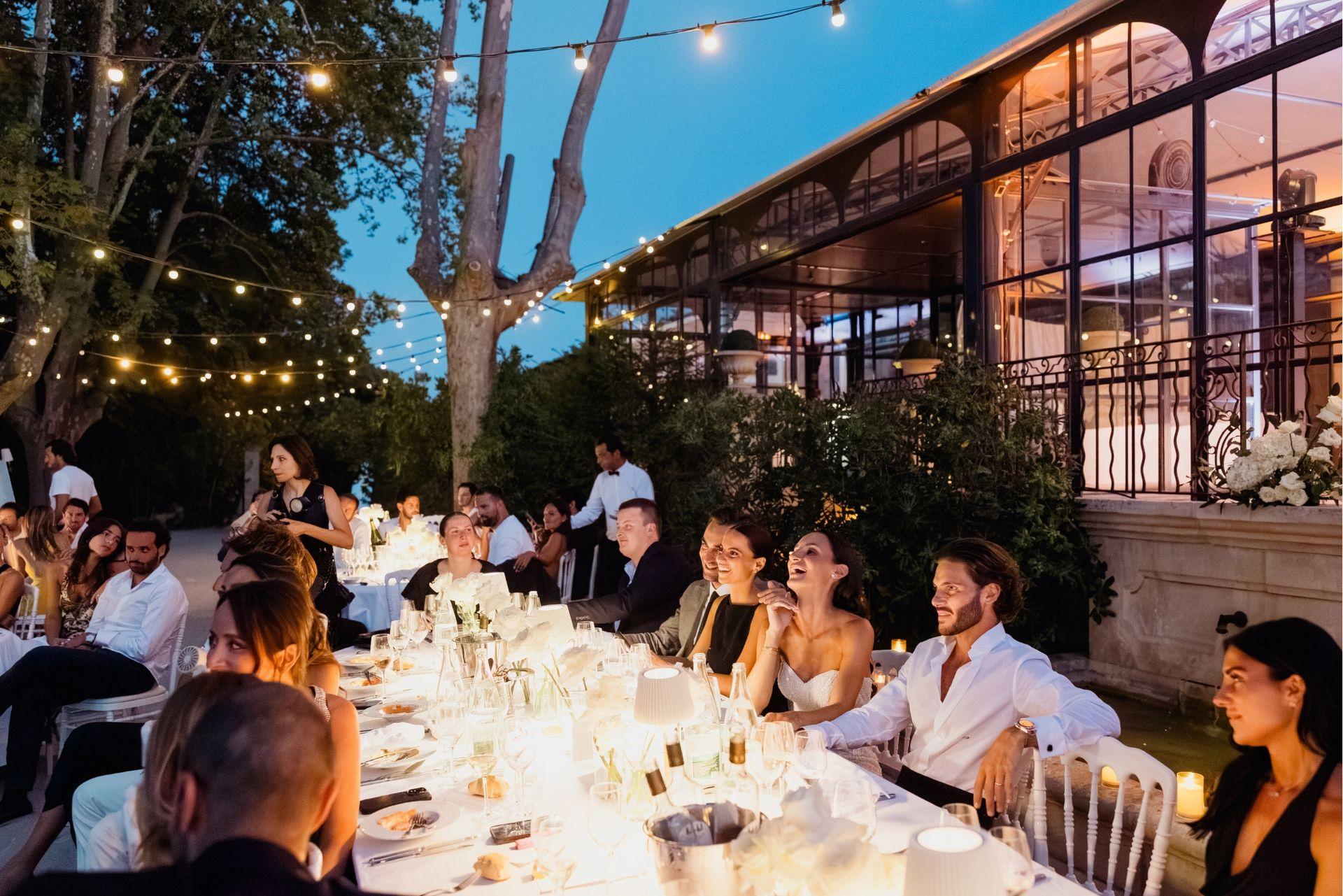
A narrative film does not invent a story.
The term "narrative" can also be confusing.
Building a narrative does not mean deciding before the wedding what story the people will have to play.
In a wedding film, the story already exists.
It is found in the relationships.
In what is said during a ceremony.
In the speeches.
In the gestures.
In the looks.
In the way two people interact.
In their loved ones.
And sometimes in everything that existed before the wedding.
The narrative work consists of identifying this material and then finding how to connect it.
A phrase spoken during dinner can thus accompany footage filmed during the preparations.
A gesture seen at the beginning of the film can resonate several minutes later.
A voice can create a link between two moments that were separated by several hours in the day.
The editing allows for these connections to be built.
The story is not invented. The way it is told, it, is constructed.
And "authentic", then?
It is probably the most difficult word to define.
Because a film does not become authentic simply because it is described that way.
For me, authenticity is found in the gap between what people actually are and what the film asks them to become.
If a couple is very demonstrative, the film can be too.
If he is much more reserved, there is no reason to ask him to play a closeness or exuberance that does not suit him.
Some weddings are extremely elegant and composed.
Others are noisy, funny, chaotic and overflowing with energy.
Some constantly switch from one to the other.
The film can maintain a recognisable visual identity while leaving enough room for these differences.
It is precisely what prevents making the same film with different people.
So, what style of wedding film should you choose?
Perhaps you should not start by choosing a label.
When you look at a videographer's work, try to observe what is actually happening in their films.
Are the images beautiful only when he controls the situation or also when events become unpredictable?
Do people seem aware of the camera?
Do the films allow you to understand something about the couples or just to discover very beautiful images of their wedding?
Does the colour grading remain consistent between a dark room, a ceremony in full sunlight and an evening?
Does real sound have a place?
Does the rhythm vary?
Do the films all look alike or do they retain something unique to each couple?
And above all:
what did you feel after watching the film in its entirety?
It is often much more revealing than a succession of adjectives.
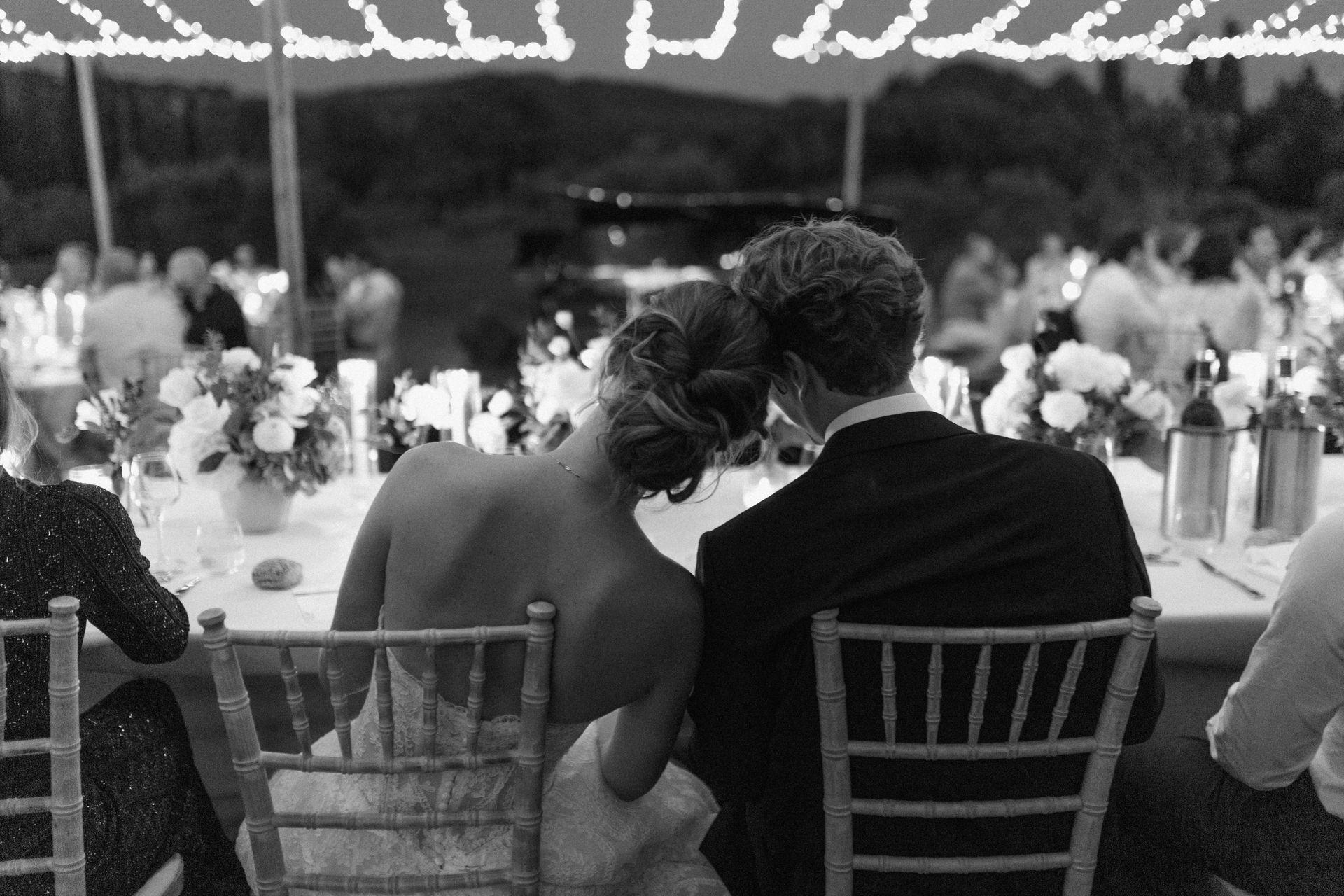
A beautiful film is not always enough
Aesthetics remain essential in my work.
I want a controlled image, chosen frames, consistent colour grading from start to finish, and a film that has a true visual identity.
But I do not want this aesthetics to erase what actually happened.
In the same way, I seek natural moments without considering that a spontaneous image should be approximate.
I am therefore not really looking to choose between a cinematic, documentary, editorial, emotional, or narrative film.
I prefer to seek the place where these different dimensions can meet.
A crafted image without it overshadowing what is happening.
Consistent colour grading without becoming an effect.
A constructed edit without giving the impression of fabricating a story.
Emotion without needing to provoke it.
Aesthetics, reality, and narration
This is ultimately how I would simply define my approach to a wedding film.
Aesthetics give it form.
Reality gives it substance.
Narration connects the two.
And when these three elements work together, the words used to define the style may become a little less important.
The film must above all allow you to recognise something.
Not just your venue, your decoration, or the clothes you wore.
But the people you were and what was really happening around you.
→ « discover my wedding films » → page My films]
→ « discover my way of working » → page Packages]
→ depuis une occurrence naturelle dans le texte ou la conclusion → article : Bien choisir son vidéaste de mariage : au-delà du style]