
Choosing a wedding videographer may seem quite simple at first.
You watch a few films, spot an aesthetic universe that appeals to you, compare services and prices, then get in touch.
But when you look more closely at the work of several videographers, the differences appear elsewhere.
In the consistency of the images. The way of framing. The sound work. The rhythm of the editing. The space given to the couple on the wedding day. And especially in the ability to create a film that truly resembles the people you have just filmed.
So, how do you choose your wedding videographer and what criteria should you really compare before booking?
Here are the ones that seem most important to me.
1. Watch several films, not just the one you like the most.
A very beautiful film is not necessarily enough to understand a videographer's work.
Watch several.
Different weddings. Different locations. Bright days and others more complex. Indoor and outdoor ceremonies. Very expressive couples and others much more reserved.
The goal is not to check if all the films look alike.
On the contrary.
Look for consistency in quality, not repetition in the films.
You should be able to recognise the videographer's perspective while discovering, each time, a different film.
This is a point I place a lot of importance on in my work.
I want to maintain a recognisable visual identity, but I do not want to reproduce the same construction from one wedding to another.
The material changes: the people, the voices, the relationships, the energy, the place, the light, the speeches.
The film must therefore change with it.
→ Discover several of my wedding films
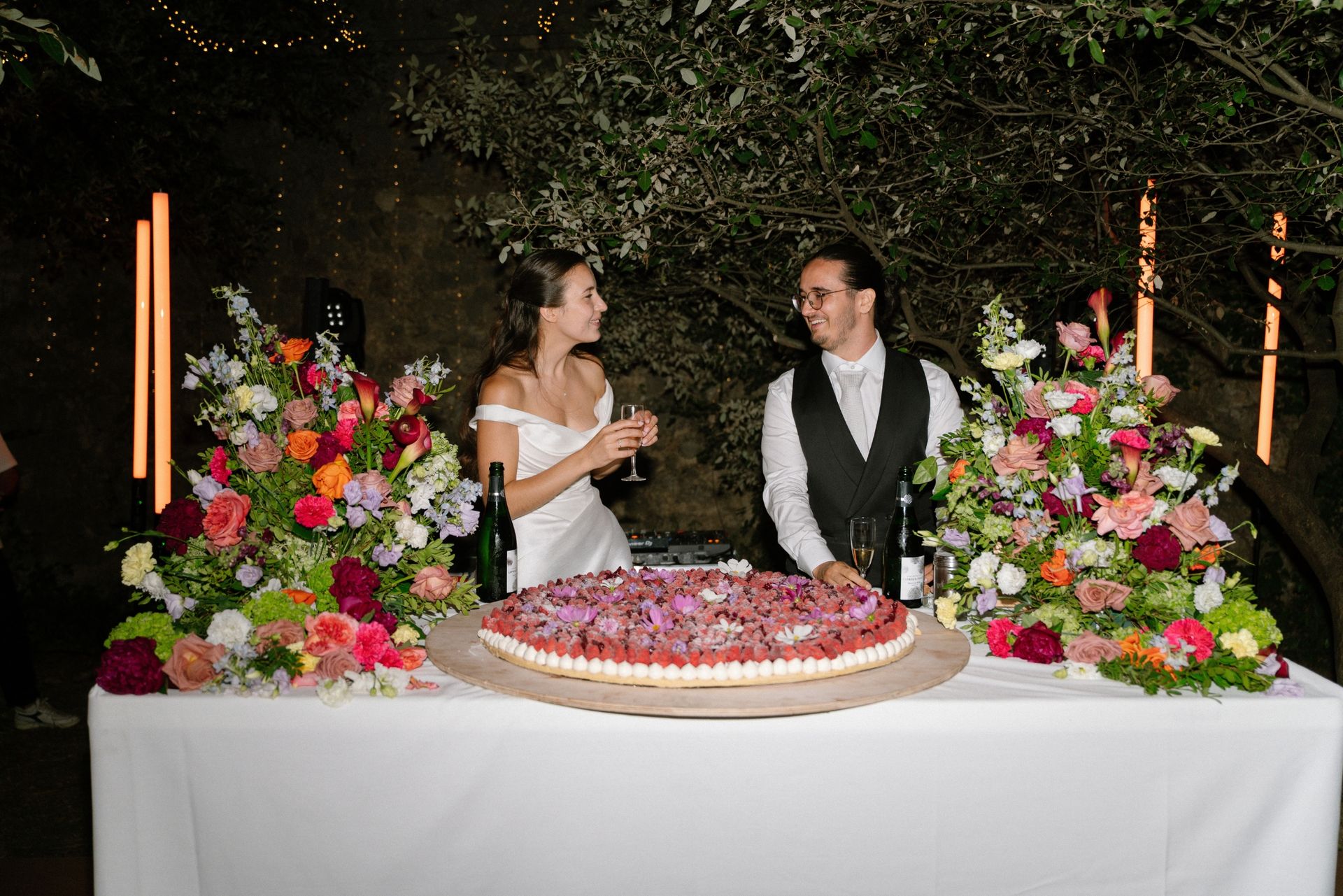
2. Look at the visual coherence of the film as a whole.
A beautiful isolated image is relatively easy to show on Instagram.
What is more interesting is to watch what happens over several minutes.
Does the colour grading remain consistent when moving from preparations to an outdoor ceremony, then to a cocktail at the end of the day and finally to an artificially lit evening?
Do the skin tones remain natural?
Do some images suddenly appear much more yellow, green, grey or desaturated than the previous ones?
Is the transition from one camera to another noticeable?
For me, successful colour grading should not draw attention to itself.
It should create continuity.
I therefore pay particular attention to the coherence between my different cameras and between all the lighting conditions encountered during a wedding.
The film can visually evolve with the day, of course.
But it must maintain its unity from beginning to end.
A beautiful isolated image is not enough. It is the whole film that must work.
3. Observe the frames and the movements
The quality of a film does not rely solely on its colour grading.
Also look at how the images are constructed.
Where does the videographer position themselves?
What do they choose to show?
Does the framing truly serve the moment?
Do the camera movements have a reason to exist or do they constantly draw attention?
An image can be still, slightly mobile, or much more dynamic depending on what is happening.
I do not seek to eliminate all movement from an image. Movement can bring a great deal of life.
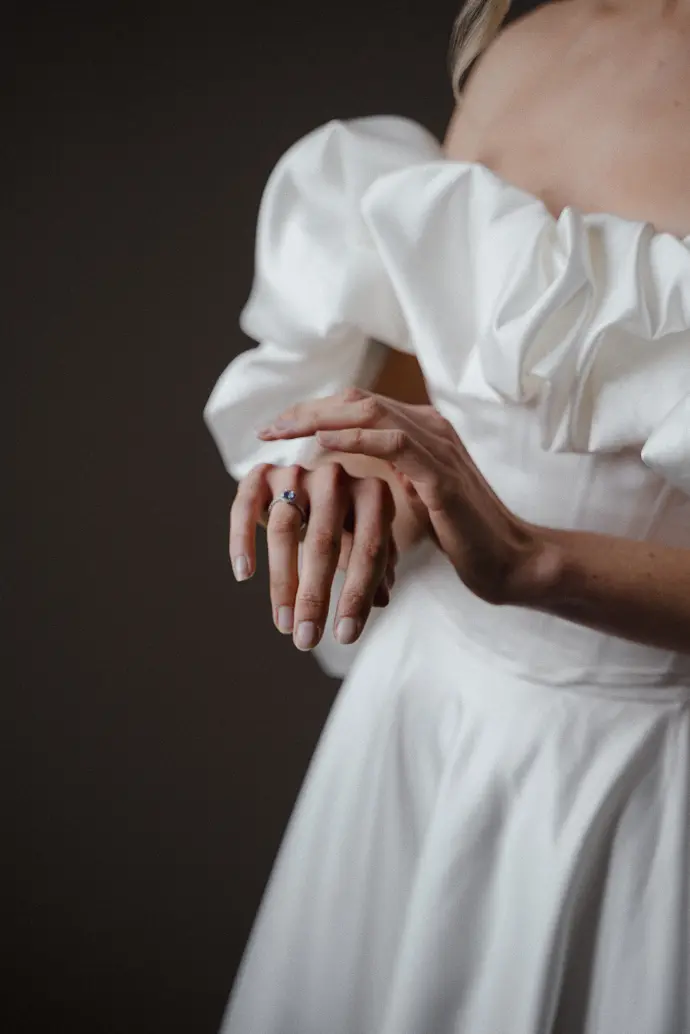
On the other hand, it must be controlled and consistent with the moment..
Precision does not mean that everything must be perfectly still.
It means that nothing should unnecessarily distract from what one is watching.
4. Ask yourself if you are really watching different films.
This is probably one of the most important criteria in my eyes.
When you watch several works by the same videographer, try to forget for a moment the locations, the dresses, and the sets.
Does the construction change?
The music?
The rhythm?
The place of speeches?
The way of entering the film?
The way of ending?
Or do you feel like you are encountering a very similar structure where only the people change?
There is not one single right way to construct a wedding film.
But in my work, I prefer to start from what actually exists.
A wedding can be full of energy and celebration.
Another can be much more intimate.
Some are shaped by the speeches.
Others by the gestures, interactions, or a particular energy.
I don’t try to fit a wedding into a predefined structure. I look for the structure that best reflects the wedding itself.
This is also why my films can be very different from one another while still sharing a consistent visual identity.
5. Look at whether the film simply captures the day… or tells a deeper story.
Not every couple wants the same level of storytelling.
And not every story needs to be told in the same way.
In my Harmonie collection, the story takes shape through the moments of the wedding itself: the glances, the gestures, the voices, the silences, and everything that naturally unfolds throughout the day.
With Signature, the creative process begins before the wedding. The couple’s story, personal archives, voice recordings, or sequences planned together can help place the wedding within a broader narrative.
In both cases, storytelling remains at the heart of the film.
What changes is the material I have to work with to tell the story.
Harmonie tells the story through the wedding itself. Signature places the wedding within a broader story.
→ Explore My Harmonie and Signature Collections
When choosing your wedding videographer, focus less on whether they use the word “storytelling” and more on what that word actually means in their work.
6. Listen to the Film as Much as You Watch It.
It's a very simple test: watch a film with a good pair of headphones.
Listen to the voices.
The ambient sounds.
The transitions.
The way speeches are woven into and out of the edit.
The space given to the natural sounds of the day.
A wedding film isn't simply a music video filled with beautiful images.
The voices and sounds recorded throughout the day are just as essential to the storytelling.
That's why capturing sound is an integral part of my work from the very beginning, using multiple audio sources depending on the moment and the setting.
Sound isn't simply added afterwards to accompany the images.
Image and sound should tell the story together.
→ Read: What Sound Reveals in a Wedding Film
7. Pay attention to the pacing, not just the length
A dynamic film isn't necessarily one that moves at a fast pace throughout.
What matters is its ability to evolve.
To pick up the pace.
To slow down.
To give a voice room to breathe.
To move from an intimate moment to a much more energetic sequence without making it feel like two different films.
The rhythm comes from the editing, but also from the movement, the sounds, the pauses, and the music.
It's a very important part of my work.
Even when the film slows down, I aim to maintain a sense of progression.
Pacing isn't about removing the quieter moments. It's about knowing when to give them space.
8. Don't judge a wedding -videographer solely by their reels.
Instagram is a great way to discover a videographer’s style.
But a 15- or 30-second reel doesn't really allow you to judge how a film is structured.
A sequence of beautiful images can work perfectly well for a few seconds.
Sustaining a story over five, six, or seven minutes requires something more.
So make sure to watch at least a few films in their entirety.
You'll get a much better sense of the consistency of the visuals, the sound design, the pacing, the transitions, and the videographer's ability to hold your attention.
This is also what sets a film apart from content designed primarily for quick viewing.
→ Wedding Film vs. Wedding Content Creator: What's the difference?
9. Understand how the videographer works on the wedding day
The final result matters.
But so does the way it's achieved.
Ask the videographer how they work.
Do they frequently step in?
Will they ask you to repeat certain actions?
How much time do they plan to spend on the couple's portrait session?
How do they work alongside the photographer?
How do they position themselves during the ceremony?
These are important questions because creating your wedding film should never come at the expense of your experience of the day.
In my work, I prefer to observe, anticipate, and adapt rather than constantly stage moments.
Without interference. Without staging. The film takes shape through the authentic moments of the wedding: the glances, the gestures, the voices, and the silences.
→ How I film a wedding without interrupting the moments as they unfold
10. Photographer, videographer, wedding planner: consider how well they work as part of a team.
A videographer never works entirely alone.
They share the day with the photographer, the wedding planner, and many other vendors. At some weddings, a wedding content creator is also part of the visual team.
They need to know how to find their place within the team.
The photographer and videographer don't need to work together every week to make a great team.
Getting in touch beforehand, understanding each other's approach, and communicating clearly are usually enough to establish a good working relationship very quickly.
The couple should never have to choose between their wedding vendors.
→ Wedding photographer and videographer: building a strong visual team
11. Compare exactly what's included in each package.
Two prices can only be compared if the services offered are truly comparable.
Here are a few things to consider:
- the hours of coverage,
- the film or films delivered,
- their duration,
- whether a teaser is included,
- the sound recording and editing,
- any full-length recordings,
- delivery times,
- available options;;
- Travel and accommodation arrangements,
- Privacy and sharing conditions.
In my collections, for example, I deliver a 45 to 60-second teaser within a week of the wedding, followed by the finished film once the editing process is complete.
The idea is to offer both an early glimpse of the wedding and the time needed to carefully craft the final film.
Comparing two prices without looking at what's actually included can therefore be misleading.
→ Wedding videographer pricing: understanding what you're really paying for
12. Ask how your footage is backed up
It's far less exciting than talking about lenses or colour grading.
But it's essential.
A wedding day can't be repeated.
So ask how the footage is backed up after the wedding and how the films are stored before delivery.
The equipment used on the wedding day matters, but keeping your footage safe afterwards is just as important a part of a professional videographer's work.
It's something you won't see in a portfolio.
Yet it deserves to be part of your decision.
13. Read the contract
Before booking, take the time to read the contract carefully.
Pay particular attention to the payment terms, cancellation or postponement conditions, delivery timelines, rights to share the films, and any confidentiality options.
A clear and detailed contract protects both parties.
Above all, it ensures that everyone knows exactly what has been agreed upon before the wedding.
14. Finally, get to know the person who will actually be there
The films themselves are, of course, the most important factor.
But you'll also be sharing a significant part of your wedding day with the person creating them.
During the preparations.
Sometimes during very intimate moments.
Throughout the ceremony.
Surrounded by your family and friends.
Having a conversation before booking is therefore a good way to understand how the videographer communicates and the role they'll play throughout the day.
You don't need to become friends during a video call.
You simply need to feel that:
« I understand how they work, and I'll feel comfortable having them around on my wedding day. »
That's more than enough.
Checklist: what to look for before choosing your wedding videographer ?
Before booking, I recommend checking the following points:
- ☐ I've watched several complete films, not just reels.
- ☐ The image quality and colour grading are consistent from one film to another.
- ☐ The framing and camera movements feel controlled and intentional.
- ☐ The films share a recognisable identity without all looking the same.
- ☐ I understand how voices and natural sound are incorporated into the films.
- ☐ I know how the videographer works on the wedding day.
- ☐ I know exactly which films and other content will be delivered.
- ☐ I know the delivery timelines.
- ☐ I understand how my footage will be backed up.
- ☐ I know how the videographer works alongside the photographer and other wedding vendors.
- ☐ I've read the terms regarding sharing, confidentiality, postponement and cancellation.
- ☐ The price and everything it includes are completely clear.
- ☐My conversation with the videographer has given me confidence in their approach.
If all these points are clear, you're no longer simply choosing a visual style.
You're choosing an approach to filming, working and crafting your wedding film.
There is no single “best” wedding videographer
There are different approaches.
Some couples will be looking for a highly documentary-style film.
Others will prefer a strong editorial aesthetic.
Others may place greater importance on storytelling, sound or the energy of the editing.
What matters most is understanding what you're watching and what you're investing in.
For my part, I aim for a very specific combination: beautiful, consistent imagery from beginning to end, carefully controlled colour grading, intentional framing, thoughtful sound design, dynamic editing and, above all, a film whose structure genuinely reflects the people I've filmed.
Not to recreate a film that has worked before.
But to create one that truly belongs to that wedding.
→ Discover my approach to wedding filmmaking
Start by watching several complete wedding films rather than just short clips on social media. Pay attention to the consistency of the visuals, colour grading, sound, pacing and variety of the films. It's also important to understand how the videographer works on the wedding day. Ultimately, the right choice comes down to finding an approach that best matches your expectations.
Yes, it's an excellent way to assess a videographer's work. A complete wedding film allows you to evaluate the visual consistency, sound, pacing and ability to build a story over several minutes — something that a short reel doesn't always reveal.
There’s no fixed timeframe. For the most popular dates, particularly Saturdays during peak wedding season, it’s best to start your search well in advance. The most important thing is to check your preferred videographer’s availability as soon as your wedding date and venue are confirmed, rather than relying on a specific number of months.
No. Experienced wedding professionals should be able to work well together even if they've never met before. Getting in touch beforehand and maintaining good communication are usually enough to ensure smooth coordination between photography and videography. A photographer and videographer who regularly work together may have a more established rhythm, but it's certainly not essential.
Make sure to check the services and deliverables included, payment terms, delivery timelines, cancellation or postponement conditions, rights to share the films, any confidentiality options, and any specific terms relating to your wedding.
Prices can vary significantly depending on the hours of coverage, the number and type of films delivered, the videographer's experience, and the amount of post-production work involved. When comparing different packages, it's therefore best to look carefully at what's included in each one rather than focusing on price alone.
→ Read the guide to wedding videographer pricing
crédit photos : Mathilde B I Gabriela Feyer I Camille Lopez